Precautions for smart recuperation system
The smart recuperation system is not a substitute for proper and safe driving.
To prevent serious injury or death:
-
Always maintain a safe distance from the vehicles ahead and adjust your vehicle speed to the road conditions.
-
The smart recuperation system cannot detect pedestrians, vehicles making a sudden stops and vehicles coming from the opposite lane.
-
Vehicles frequently changing lanes may cause a delay or may cause the smart recuperation system to react to a vehicle in an adjacent lane.
-
Press the brake pedal when stopping the vehicle.
-
Press the brake pedal to decelerate in the following conditions when:
-
The front part of the vehicle is lifted up because of the cargo loaded on the rear part of the vehicle.
-
The steering wheel is being steered.
-
The vehicle is being driven in the centre of the lane.
-
The vehicle is being driven on a narrow or curved road.
-
-
The smart recuperation system may not operate normally if there is interference from strong electromagnetic waves.
-
If there is impact on or near the radar, the radar may be damaged or not be properly aligned near the radar, even though a warning message does not appear on the instrument cluster, the system may not operate properly. We recommend that your vehicle be inspected by an authorised HYUNDAI dealer.
-
Always keep the sensor and the surrounding clean.
-
Do not install a licence plate frame or other objects such as bumper sticker, film, bumper guard, or bumper wrap near the radar.
-
Use only genuine HYUNDAI parts to repair the bumper where the radar is located.
-
Smart recuperation system may not work properly if the bumper has been replaced, or the surroundings of the radar has been damaged or painted.
-
Do not spray the front radar or the surrounding area directly with high pressure water.
Detecting vehicle ahead
-
The smart recuperation system may not detect the vehicle ahead or may suddenly detect the vehicle ahead, such as when the smart regeneration system responds slowly, or when driving uphill, or when driving through a curve. The regenerative braking intensity may increase and decelerate your vehicle.
-
Some vehicles in your lane may not be detected by the sensor:
-
Narrow vehicles, such as motorcycles or bicycles
-
Vehicles offset to one side
-
Slow-moving vehicles or sudden decelerating vehicles
-
Vehicles with small rear profile, such as trailers with no loads
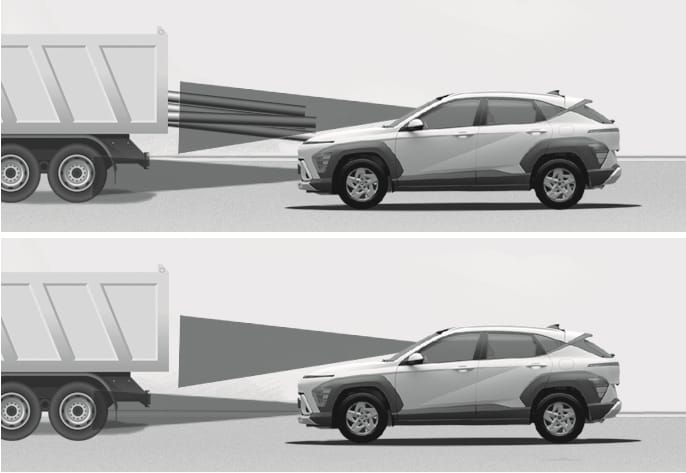
2C_FCADetectingVehicle
-
-
When the vehicle in front of the foregoing vehicle is at a stop and the foregoing vehicle changes the lane, the front sensors may be unable to recognise the stopped vehicle.
Driving on curves
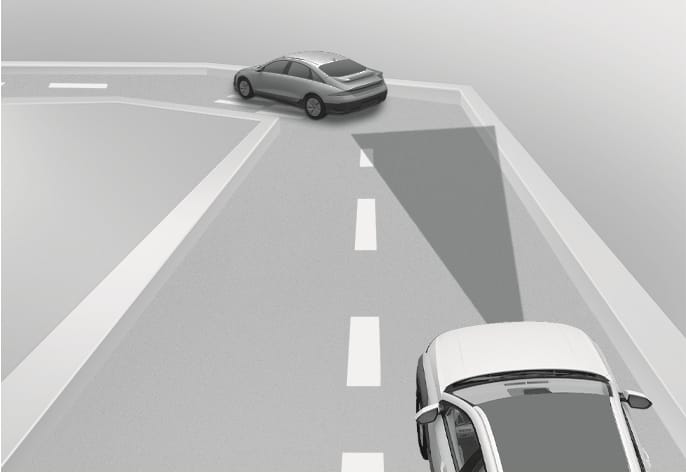
2C_FCADrivingOnCurveLoad
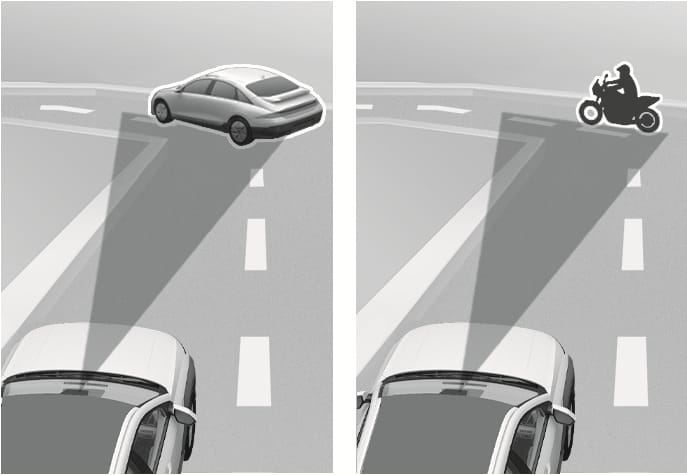
2C_FCADrivingOnCurveLoad_3
On curves, the smart recuperation system may not detect a vehicle in the same lane, and may accelerate the vehicle by lowering the regenerative braking intensity automatically. Your vehicle speed may decelerate by increasing regenerative braking intensity automatically if a vehicle is detected in an adjacent lane or when a vehicle ahead is detected suddenly. Apply the brake pedal or accelerator pedal depending on the road and driving conditions.
Driving on hills
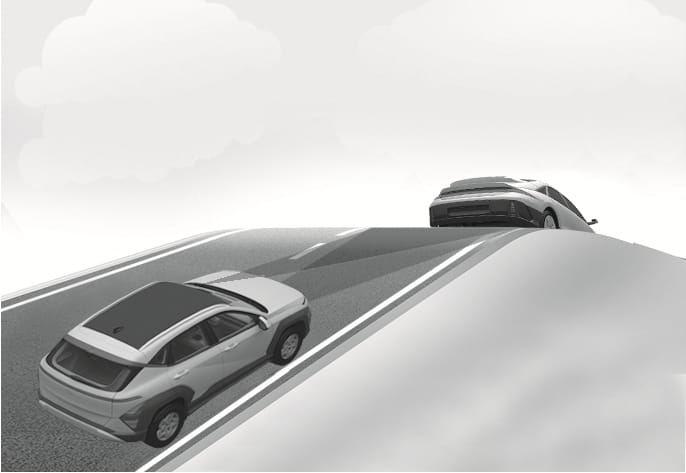
2C_FCADrivingOnInclinedLoad
During uphill or downhill coasting, the smart recuperation system may not detect a moving vehicle in your lane, and cause your vehicle to accelerate. Also, your vehicle speed decelerates when a vehicle ahead is detected suddenly. Apply the brake pedal or accelerator pedal depending on the road and driving conditions.
Changing lanes
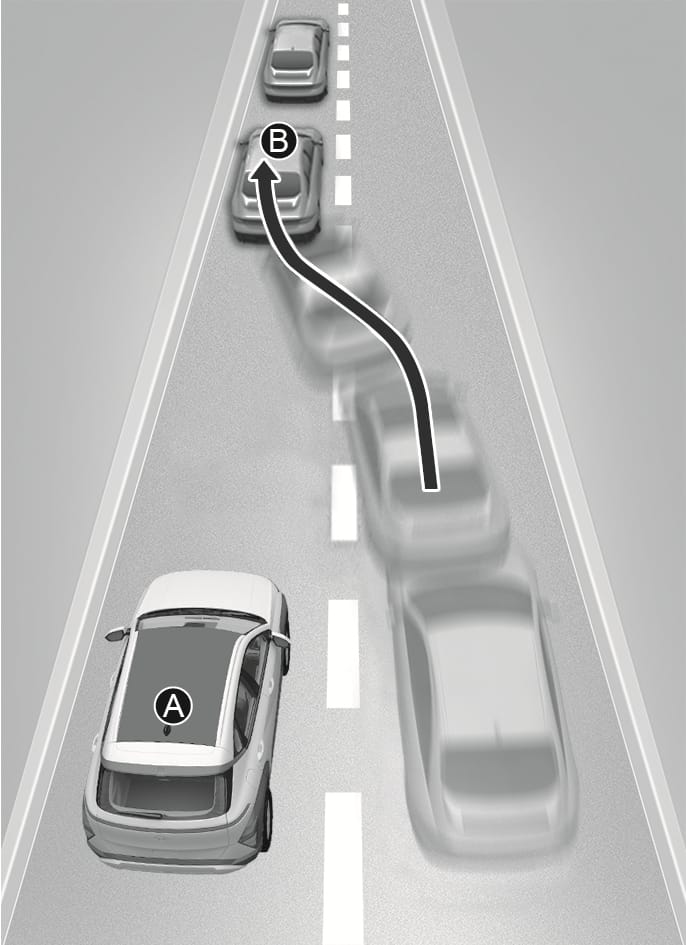
2C_FCAChangingLane
When a vehicle moves into your lane from an adjacent lane, it cannot be detected by the sensor until it is in the sensor's detection range. The smart recuperation system may not immediately detect the vehicle when your vehicle changes lanes abruptly.