Battery recharging
Your vehicle has a maintenance free, calcium based battery.
-
If the battery becomes discharged in a short time (because, for example, the headlights or interior lights were left on while the vehicle was not in use), recharge it by slow charging (trickle) for 10 hours.
-
If the battery gradually discharges because of high electric load while the vehicle is being used, recharge it at 20-30 A for two hours.
Always follow these instructions when recharging your vehicle's battery to avoid the risk of SERIOUS INJURY or DEATH from explosions or acid burns:
-
Before performing maintenance or recharging the battery, turn off all accessories and press the Engine Start/Stop button to the OFF position.
-
Keep all flames, sparks, or smoking materials away from the battery.
-
Always work outdoors or in an area with plenty of ventilation.
-
Wear eye protection when checking the battery during charging.
-
The battery must be removed from the vehicle and placed in a well ventilated area.
-
Watch the battery during charging, and stop or reduce the charging rate if the battery cells begin boiling violently.
-
The negative battery cable must be removed first and installed last when the battery is disconnected. Disconnect the battery charger in the following order:
-
Turn off the battery charger main switch.
-
Unhook the negative clamp from the negative battery terminal.
-
Unhook the positive clamp from the positive battery terminal.
-
-
Always use a genuine HYUNDAI approved battery or the equivalent specified for your vehicle when you replace the battery.
AGM battery
-
Absorbent Glass Matt (AGM) batteries are maintenance-free and have the AGM battery serviced by an authorized HYUNDAI dealer. For charging your AGM battery, use only fully automatic battery chargers that are specially developed for AGM batteries.
-
When replacing the AGM battery, use parts for replacement from an authorized HYUNDAI dealer.
-
Do not open or remove the cap on top of the battery. This may cause leaks of internal electrolyte that could result in severe injury.
After jump-starting the vehicle with a good battery, drive it for 20–30 minutes before shutting it off. The vehicle may not restart if you shut it off before the battery had a chance to adequately recharge. See "Jump-starting" in chapter 8 for more information on jump-starting procedures.
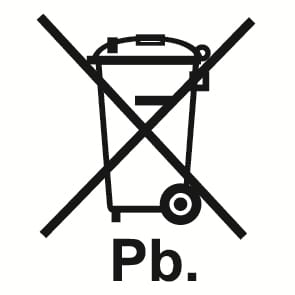
An inappropriately disposed battery can be harmful to the environment and human health. Dispose of the battery according to your local law(s) or regulation.