Where Are the Air Bags?
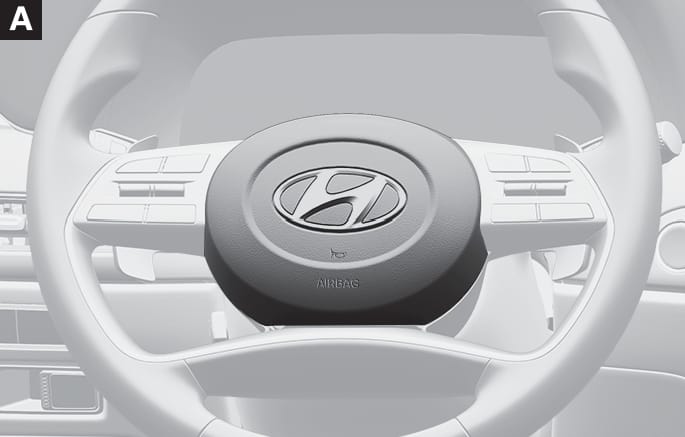
B0071KO01
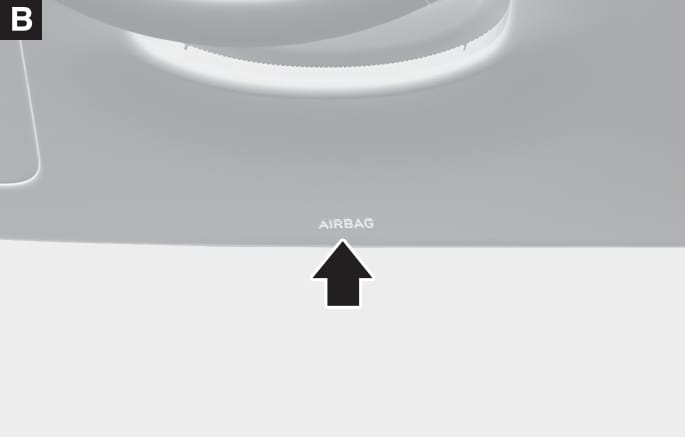
B0071KO02
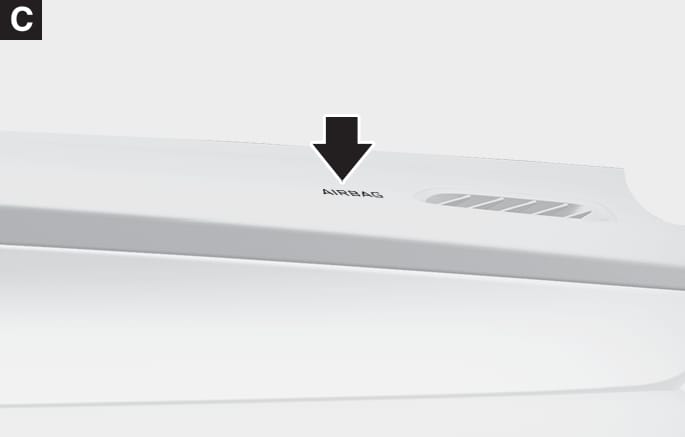
B0072EE01
- : Driver’s front air bag
- : Driver’s knee air bag
- : Passenger’s front air bag
Your vehicle is equipped with an Advanced Supplemental Restraint System (SRS) and lap/shoulder belts at both the driver and passenger seating positions.
The SRS consists of air bags which are located in the center of the steering wheel, in the driver’s side lower crash pad below the steering wheel, and the passenger’s side front panel pad above the glove box.
The air bags are labeled with the letters “AIR BAG” embossed on the pad covers.
The purpose of the SRS is to provide the vehicle’s driver and front passengers with additional protection than that offered by the seat belt system alone in case of a frontal impact of sufficient severity.
The SRS uses sensors to gather information about the driver’s and front passenger's seat belt usage and impact severity.
The seat belt buckle sensors determine if the driver and front passenger's seat belts are fastened. These sensors provide the ability to control the SRS deployment based on whether or not the seat belts are fastened, and how severe the impact is.
The advanced SRS offers the ability to control the air bag inflation within two levels. A first stage level is provided for moderate-severity impacts. A second stage level is provided for more severe impacts.
According to the impact severity, and seat belt usage, the SRS Control Module (SRSCM) controls the air bag inflation. Failure to properly wear seat belts can increase the risk or severity of injury in an accident.
To reduce the risk of serious injury or death from inflating front air bags, take the following precautions:
-
Seat belts must be worn at all times to help keep occupants positioned properly.
-
Move your seat as far back as possible from front air bags, while still maintaining control of the vehicle.
-
Never lean against the door or center console.
-
Do not allow the front passenger to place their feet or legs on the dashboard.
-
No objects (such as crash pad cover, mobile phone holder, cup holder, perfume or stickers) should be placed over or near the air bag modules on the steering wheel, instrument panel, windshield glass, and the front passenger’s panel above the glove box. Such objects could cause harm if the vehicle is in a crash severe enough to cause the air bags to deploy.
-
Do not attach any objects on the front windshield and inside mirror.
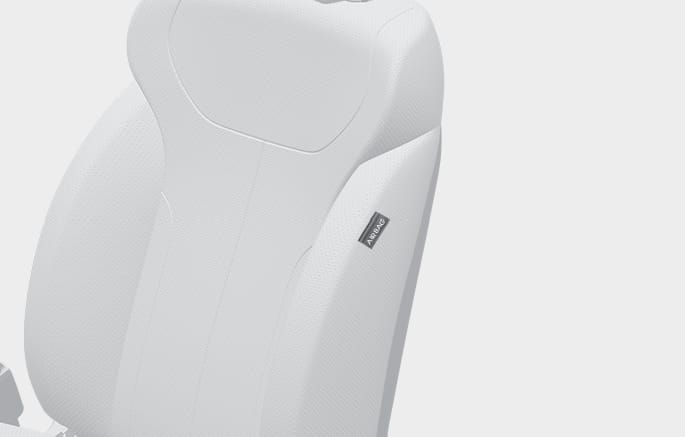
B0074EU01
B0070US01
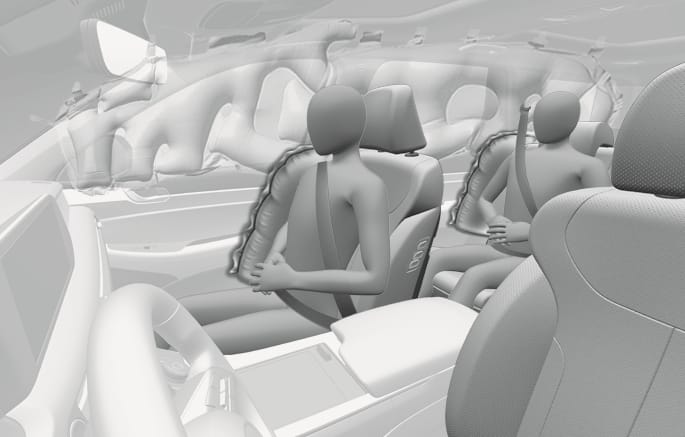
Your vehicle is equipped with a side air bag in each seat. The purpose of the air bag is to provide the vehicle’s additional protection than that offered by the seat belt alone.
The side air bags are designed to deploy during certain side impact collisions, depending on the crash severity.
The side and/or curtain air bags and pre-tensioners on both sides of the vehicle may deploy if a rollover or possible rollover is detected.
The side air bags are not designed to deploy in all side impact or rollover situations.
To reduce the risk of serious injury or death from an inflating side air bag take the following precautions:
-
Seat belts must be worn at all times to help keep occupants positioned properly.
-
Do not allow passengers to lean their heads or bodies onto doors, put their arms on the doors, stretch their arms out of the window, or place objects between the doors and seats.
-
Hold the steering wheel at the 9 o’clock and 3 o’clock positions, to minimize the risk of injuries to your hands and arms.
-
Do not use any accessory seat covers. This could reduce or prevent the effectiveness of the system.
-
Do not hang other objects except clothes. In an accident it may cause vehicle damage or personal injury especially when air bag is inflated.
-
Do not place any objects over the air bag or between the air bag and yourself. Also, do not attach any objects around the area the air bag inflates such as the door, side door glass, front and rear pillar.
-
Do not place any objects between the door and the seat. They may become dangerous projectiles if the side air bag inflates.
-
Do not install any accessories on the side or near the side air bags.
-
Do not cause impact to the doors when the ignition switch is in the ON or START position as this may cause the side air bags to inflate.
-
If the seat or seat cover is damaged, have the vehicle checked and repaired by an authorized HYUNDAI dealer.
B0075KO01
B0076US01
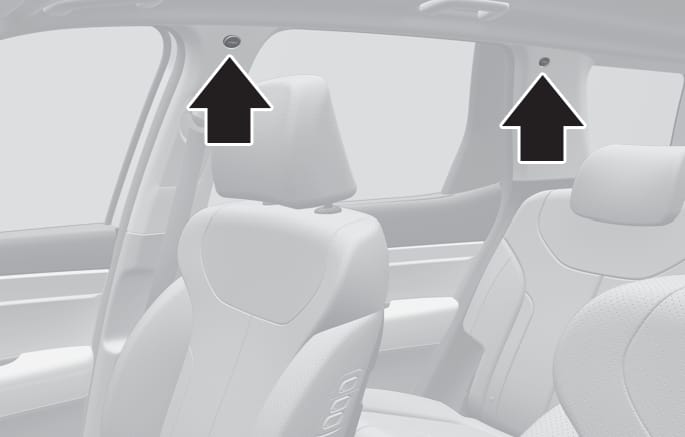
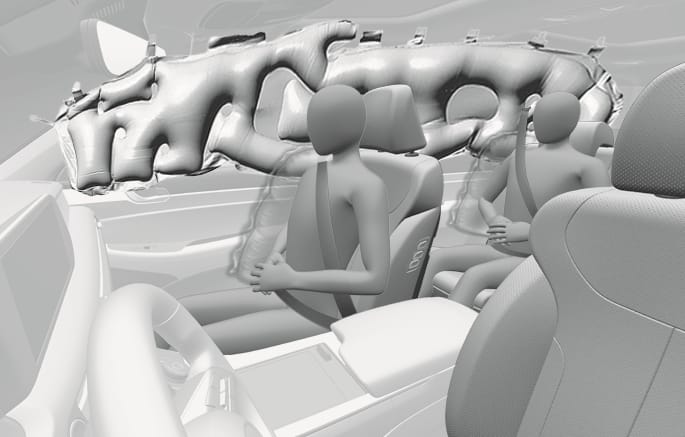
Curtain air bags are located along both sides of the roof rails above the front and rear doors.
They are designed to help protect the heads of the front seat occupants and the rear outboard seat occupants in certain side impact collisions.
The curtain air bags are designed to deploy during certain side impact collisions, depending on the crash severity.
The side and/or curtain air bags and pre-tensioners on both sides of the vehicle may deploy if a rollover or possible rollover is detected.
The curtain air bags are not designed to deploy in all side impact or rollover situations.
To reduce the risk of serious injury or death from an inflating curtain air bag, take the following precautions:
-
All seat occupants must wear seat belts at all times to help keep occupants positioned properly.
-
Properly secure Child Restraint System as far away from the door as possible.
-
Do not place any objects over the air bag. Also, do not attach any objects around the area the air bag inflates such as the door, side door glass, front and rear pillar, roof side rail.
-
Do not hang other objects except clothes, especially hard or breakable objects.
In an accident, it may cause vehicle damage or personal injury.
-
Do not allow passengers to lean their heads or bodies onto doors, put their arms on the doors, stretch their arms out of the window, or place objects between the doors and seats.
-
Do not open or repair the side curtain air bags.