BCA Operation
2C_SideMirrorWaringLamp
2C_SideMirrorWaringLamp2
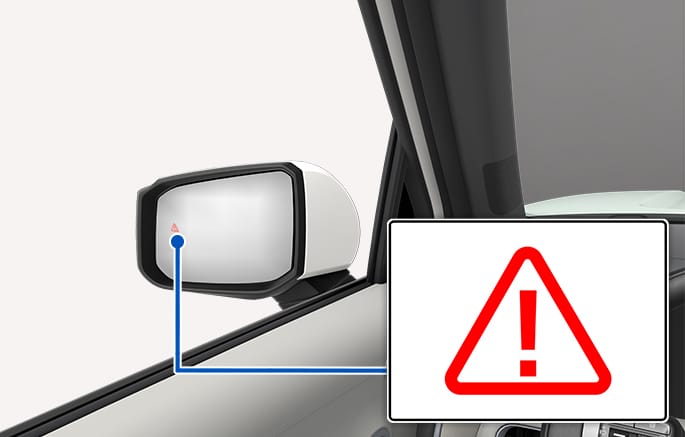
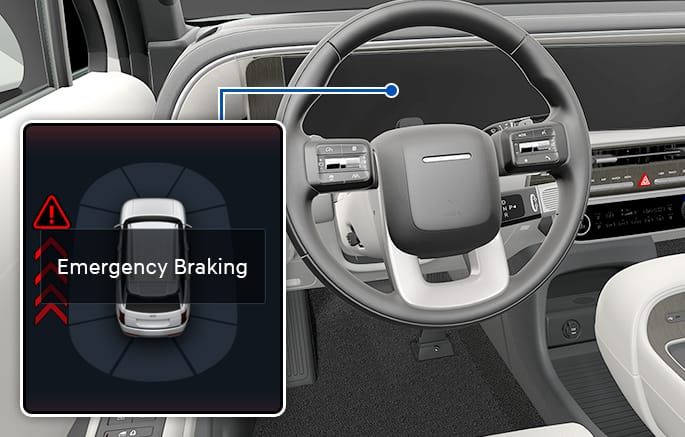
BCA warns the driver that warning or emergency braking is activated as follows:
-
The warning light on the side view mirror (or digital side mirror) illuminates
-
The warning message appears on the cluster display
-
An audible warning sounds
-
Head-Up Display (HUD) illuminates (if equipped)
-
The steering wheel vibrates
2C_BCAOperation
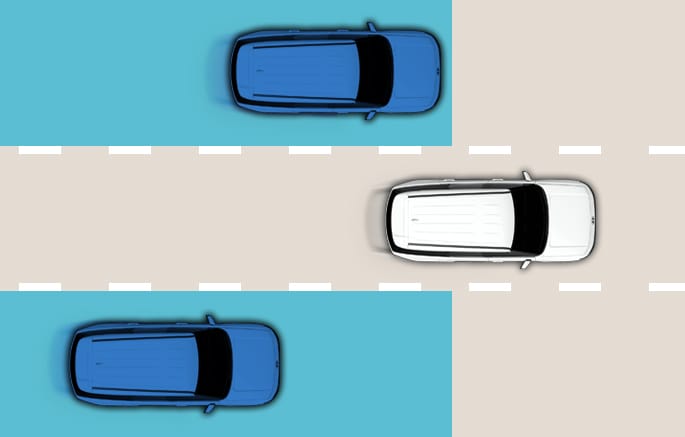
When a vehicle is detected in the rear blind spot area, the warning light illuminates on the side view mirror (or digital side mirror), a warning appears on the cluster display, and HUD (if equipped) under the following conditions:
-
Your vehicle speed: above 12 mph (20 km/h)
-
Vehicle in the blind spot area: above 7 mph (10 km/h)
Collision warning operates when the turn signal is turned on in the direction of the detected vehicle. The warning light blinks on the outside side view mirror (or digital side mirror), a warning appears on the cluster display and HUD (if equipped), and an audible warning sounds under the following conditions:
-
Your vehicle speed: above 25 mph (40 km/h)
-
Vehicle in the blind spot area: above 7 mph (10 km/h)
-
The detecting range of the rear corner radar is determined by a standard road width. On narrow roads, BCA may detect other vehicles two lanes over and warn you. On wide roads, BCA may not be able to detect a vehicle driving in the next lane and may not warn you.
-
When the hazard warning flasher is on, the collision warning initiated by activating the turn signal may not operate.
-
The warning range may differ depending on the speed of your vehicle.
-
If you pass other vehicles at high speeds, BCA may not warn you even when there is a vehicle in the blind spot area.
-
The warning timing may differ depending on the speed of the vehicle approaching you at high speed.
Collision warning may occur when you turn left. Maintain a proper distance from other vehicles when turning.
2C_BCAOperation_2
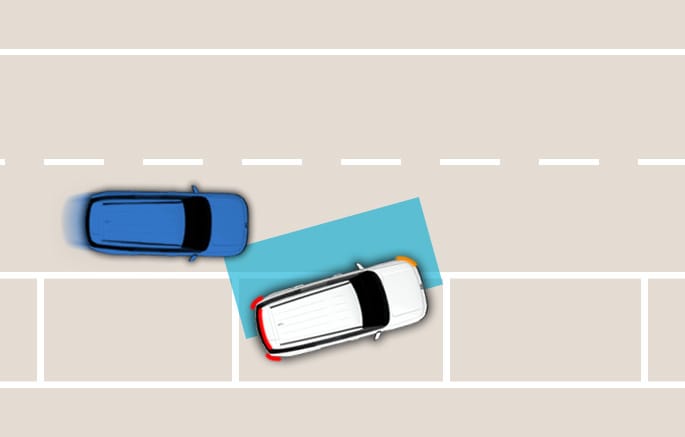
When the driver turns the steering wheel about one turn to exit the vehicle forward, if there is a risk of collision, warning (with warning light, warning message, warning sound, and steering wheel vibration) and braking activates under the following conditions:
-
Your vehicle speed: below 2 mph (3 km/h)
-
Vehicle in the blind spot area: above 3 mph (5 km/h)
Braking control ends about 2 seconds after your vehicle is stopped following an emergency braking event. For your safety, the driver should depress the brake pedal immediately and check the surroundings.
-
If any other system's warning message appears or audible warning is generated, BCA's warning message may not appear and audible warning may not be generated.
-
You may not hear the warning sound of BCA if the surroundings are noisy. Adjust other sounds in the vehicle to an appropriate level and always be aware of your surroundings.
-
BCA may not operate if the driver applies the brake pedal to avoid a collision.
-
When BCA is operating, braking control by the function automatically cancels when the driver excessively depresses the accelerator pedal or sharply steers the vehicle.
-
During BCA operation, passengers and loose objects in the vehicle may shift and injure passengers. Always have the seat belt on and keep loose objects secured.
-
Even if there is a problem with BCA, the vehicle's basic steering and braking performance operates properly.
-
BCA does not operate in all situations and cannot avoid all collisions.
-
BCA may warn the driver late or may not warn the driver depending on the road and driving conditions.
-
Driver should maintain control of the vehicle at all times. Do not solely depend on BCA. Rather, maintain a safe distance, and if necessary, depress the brake pedal to reduce driving speed or to stop the vehicle.
-
Never deliberately test BCA. It may cause serious injury or death.
-
The brake control may not operate properly depending on the status of Electronic Stability Control (ESC).
Braking is not assisted and only a warning is provided when:
-
The ESC warning light is on
-
ESC is engaged in a different function
-