FCA Operation
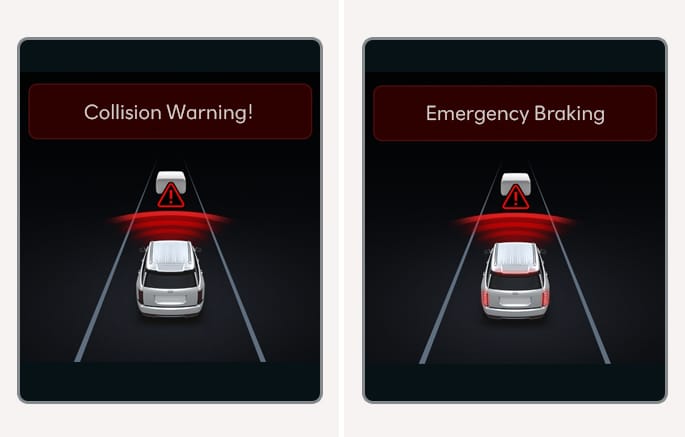
2C_FCABasicInfo
-
When FCA operates, Forward Safety
O warning light or Emergency SteeringP warning light blinks, a warning message appears on the instrument cluster, an audible warning sounds and the steering wheel vibrates. -
Press the hazard warning flasher to turn off the audible warning of the collision warning or emergency braking.
-
If the vehicle stops due to collision warning, emergency braking, or emergency steering (if equipped), a warning message appears on the instrument cluster.
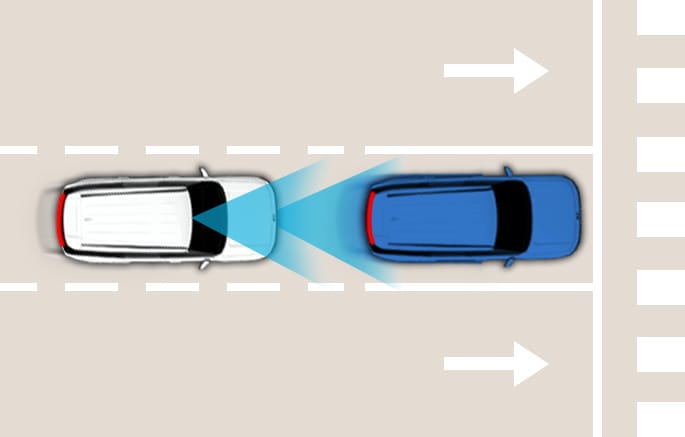
2C_FCABasicFunction
While driving, FCA Basic function helps avoid a collision according to the speed of your vehicle and the vehicle, motorcyclist, pedestrian, or cyclist ahead by warning or applying emergency braking.
-
Vehicle or motorcyclist:
-
The function operates with a strong braking power when there is a risk of collision, the vehicle ahead is moving, and your vehicle speed is between about 6-80 mph (10-130 km/h) or the vehicle ahead is not moving, and your vehicle speed is between about 6-53 mph (10-85 km/h).
If FCA judges that avoiding a collision is difficult even by changing the driving lane, braking is assisted earlier when your vehicle speed is between about 6-62 mph (10-100 km/h). (if equipped)
-
The function operates with a weak braking power or a warning appears when there is a risk of collision and your vehicle speed is between about 6-125 mph (10-200 km/h).
-
-
Pedestrian or cyclist:
-
Emergency braking may operate when there is a risk of collision and your vehicle speed is between about 6-40 mph (10-65 km/h).
-
Collision warning may operate when there is a risk of collision and your vehicle speed is between about 6-53 mph (10-85 km/h).
-
Braking control ends about 2 seconds after your vehicle is stopped following an emergency braking event. For your safety, the driver should depress the brake pedal immediately and check the surroundings.
The function operation speed range may decrease due to the front traffic condition or the surroundings of the vehicle.
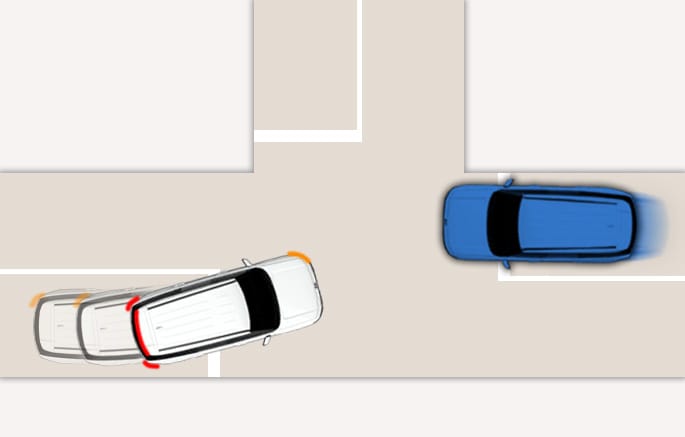
2C_FCAJunctionTurningFunction
When turning left at a crossroad with the turn signal on, Junction Turning function helps avoid a collision with an oncoming vehicle or motorcyclist in an adjacent lane by warning or applying emergency braking.
The function operates when:
-
Your vehicle speed is between about 6-19 mph (10-30 km/h)
-
Oncoming vehicle speed is between about 19-44 mph (30-70 km/h)
-
Oncoming motorcyclist or cyclist speed is between about 9-44 mph (15-70 km/h)
Braking control ends about 2 seconds after your vehicle is stopped following an emergency braking event. For your safety, the driver should depress the brake pedal immediately and check the surroundings.
When turning right at an intersection, braking is assisted to reduce or avoid collisions if there is a collision risk with a cyclist approaching at the speed of 9-44 mph (15-70 km/h) from the opposite side.
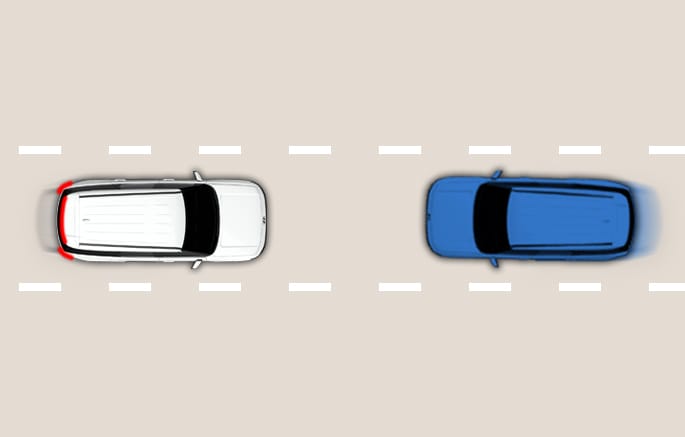
2C_FCALaneChangeOncomingFunction
When there is a risk of collision with a vehicle or motorcyclist approaching from the opposite side, Direct Oncoming function helps reduce the speed by warning or applying emergency braking.
The function operates when:
-
Your vehicle speed* is between about 19-80 mph (30-130 km/h)
-
Oncoming vehicle or motorcyclist speed is 6 mph (10km/h) or higher
*: The function warns the driver if there is a risk of collision, even when your vehicle speed is between about 6-80 mph (10-130 km/h).
Braking control ends about 2 seconds after your vehicle is stopped following an emergency braking event. For your safety, the driver should depress the brake pedal immediately and check the surroundings.
If your vehicle or the oncoming vehicle or motorcyclist is not driving straight, Direct Oncoming function warning and control may be late or may not operate.
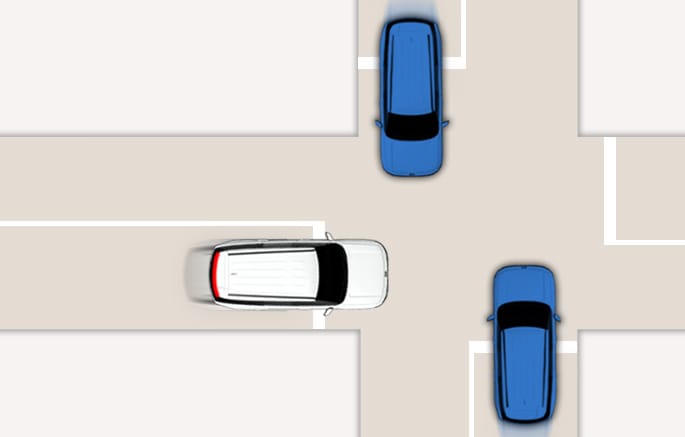
2C_FCAJunctionCrossingFunction
When crossing an intersection, Junction Crossing function helps avoid a collision with an oncoming vehicle on the left or right side by warning or applying emergency braking.
The function operates when:
-
Your vehicle speed is between about 6-34 mph (10-55 km/h)
-
Crossing vehicle speed is between about 6-25 mph (10-40 km/h)
-
The function warns the driver if there is a risk of collision, even when crossing vehicle speed is between about 6-37 mph (10-60 km/h)
Braking control ends about 2 seconds after your vehicle is stopped following an emergency braking event. For your safety, the driver should depress the brake pedal immediately and check the surroundings.
If the collision angle with the crossing vehicle is beyond a certain range, Junction Crossing function warning and control may be late or may not operate.
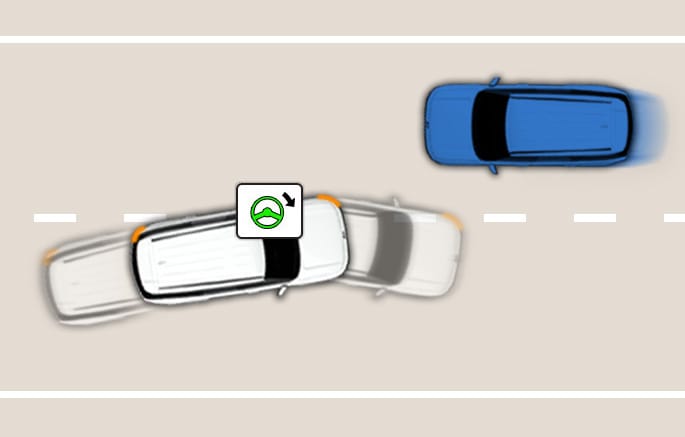
2C_FCALaneOvertakingOncomingFunction
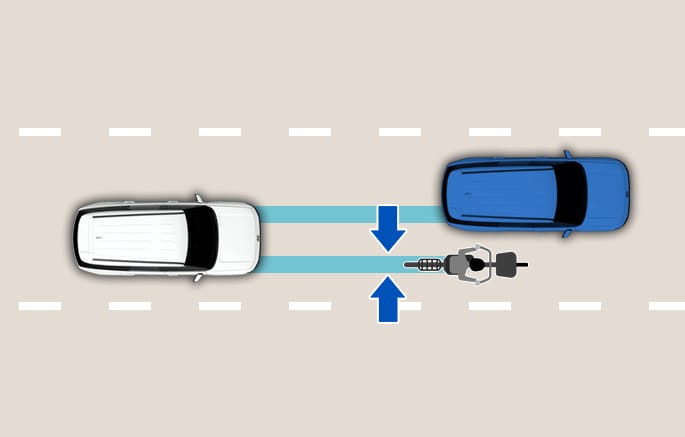
When changing lanes, Lane-Change Oncoming function helps avoid a collision with an oncoming vehicle or motorcyclist by warning or assisting the driver's steering.
The function operates when:
-
Your vehicle speed is between about 25-90 mph (40-145 km/h)
-
Oncoming vehicle or motorcyclist speed is 6 mph (10km/h) or higher
-
Relative speed with your vehicle and the oncoming vehicle or motorcyclist is 124 mph (200 km/h) or lower
Lane-Change Oncoming function only operates when both lane markings are detected.
If there is a risk of collision with a surrounding vehicle, motorcyclist, pedestrian, or cyclist due to emergency steering, only a collision warning is provided.
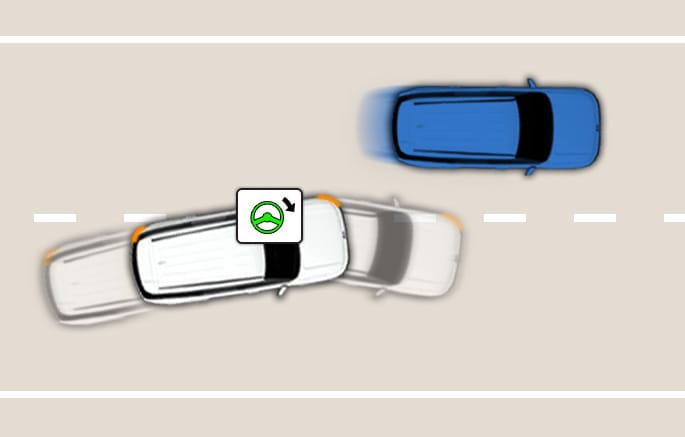
2C_FCALaneChangeSideFunction
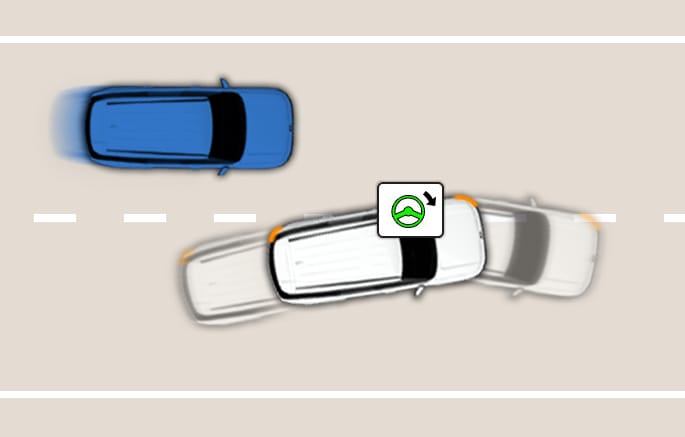
2C_FCALaneChangeSideFunction_2
When changing lanes, Lane-Change Side function helps avoid a collision with the vehicle or motorcyclist ahead in the next lane by warning or assisting the driver's steering.
The function operates when:
-
Your vehicle speed is between about 25-90 mph (40-145 km/h).
-
Lane-Change Side function does not operate if the vehicle or motorcyclist in the next lane is not moving.
-
The detection range is set to a standard road width. On a narrow or wide road, the Lane-Change Side function may detect a vehicle or motorcyclist two lanes over or may not detect a vehicle or motorcyclist in the next lane properly.
-
Lane-Change Side function may be canceled under the following circumstances:
-
Your vehicle enters the next lane by a certain distance.
-
You steer away from the collision risk.
-
The steering wheel is sharply steered.
-
The brake pedal is depressed.
-
FCA Emergency braking is operating.
-
-
After Lane-Change Side function operation or lane change, you must drive to the center of the lane. Lane-Change Side function does not operate if the vehicle is driven close to one side of the lane.
-
Lane-Change Side function only operates when both lane markings are detected.
-
If there is an approaching vehicle or motorcyclist in the rear side, the warning light on the side view mirror also illuminates.
-
If there is a risk of additional collision due to emergency steering, Lane-Change Side function only provides a collision warning.
-
Collision warning operates when you turn left.
2C_FCAEvasiveSteeringAssistFunction
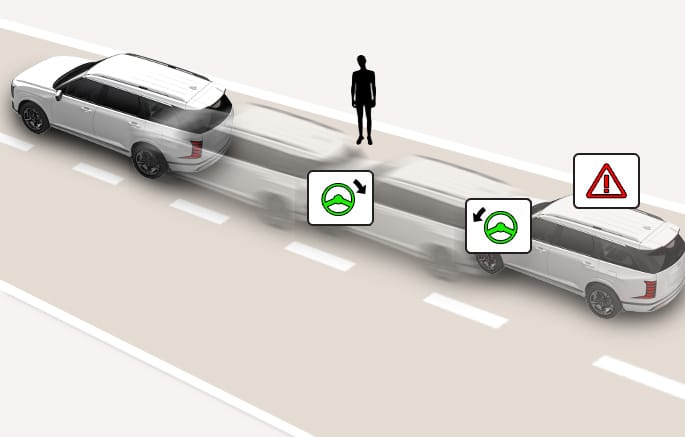
When there is a risk of collision with a subject ahead in the same lane, Evasive Steering Assist function helps avoid a collision by warning or assisting the driver's steering.
Emergency steering (Driver steering assist)
When there is a risk of collision with a vehicle, motorcyclist, pedestrian, or cyclist in the operating area of Evasive Steering Assist function, the steering is assisted to help prevent collision if the driver steers the vehicle to avoid collision.
The function operates when:
-
Your vehicle speed is between about 25-53 mph (40-85 km/h).
Emergency steering (Evasive Steering Assist)
When there is a high risk of collision with a motorcyclist, pedestrian or cyclist in front, and the vehicle speed to operate emergency braking has exceeded, the steering is assisted to help prevent collision if there is enough space to avoid collision in the driving lane.
The function operates when:
-
Your vehicle speed is between about 40-47 mph (65-75 km/h).
2C_EvasiveSteeringAssist
-
The steering wheel may turn automatically when emergency steering is operating.
-
Emergency steering automatically cancels when risk factors disappear. If necessary, the driver must steer the vehicle.
-
Emergency steering may not operate or may cancel during operation if the steering wheel is held tight or steered in the opposite direction.
-
Emergency steering may not work or may stop if the turn signal is activated.
-
When steering is assisted to avoid collision with a vehicle, motorcyclist, pedestrian, or cyclist, Evasive Steering Assist may be canceled if a collision with another object (vehicle, motorcyclist, pedestrian, or cyclist) is expected.
-
Evasive Steering Assist may not operate if space to avoid collision in the driving lane is insufficient.