Seat Belt Restraint System
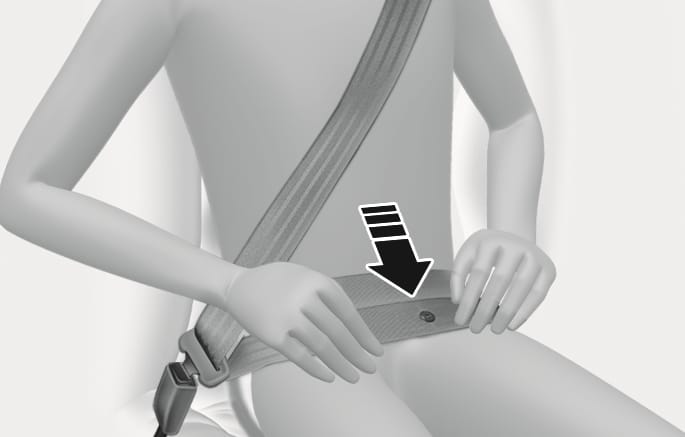
2C_SeatBeltWearStep_2
Improperly positioned seat belts may increase the risk of serious injury in an accident. Take the following precautions when adjusting the seat belt:
-
Position the lap portion of the seat belt as low as possible across your hips, not on your waist, so that it fits snugly. This allows your strong pelvic bones to absorb the force of the crash, reducing the chance of internal injuries.
-
Position one arm under the shoulder belt and the other over the belt, as shown in the illustration.
-
Always position the shoulder belt anchor into the locked position at the appropriate height.
-
Never position the shoulder belt across your neck or face.
To fasten your seat belt:
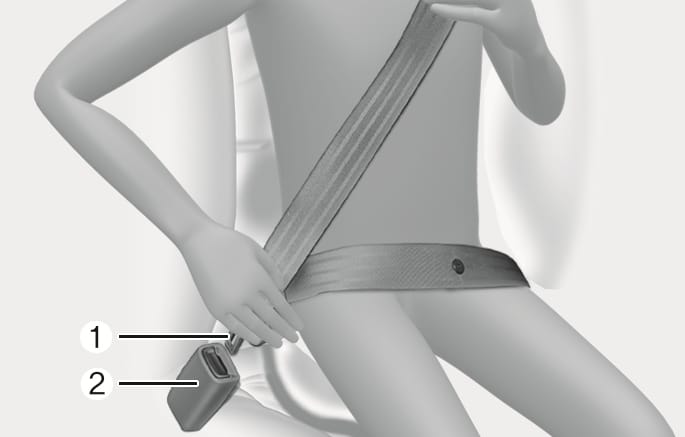
2C_SeatBeltWearStep
Pull it out of the retractor and insert the metal tab (1) into the buckle (2). There will be an audible “click” when the tab locks into the buckle.
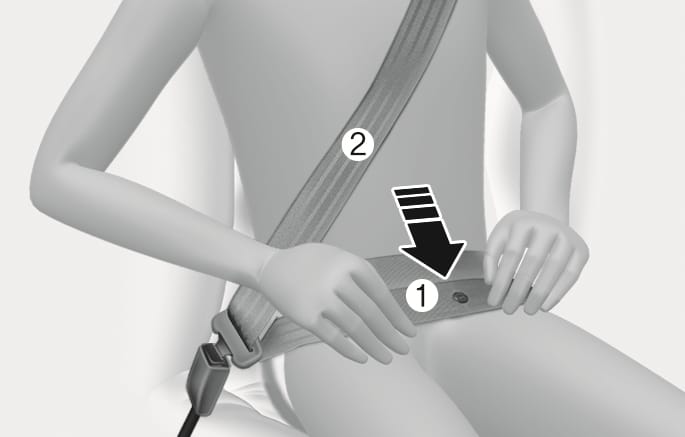
2C_SeatBeltCorrectWear
You should place the lap belt (1) portion across your hips and the shoulder belt (2) portion across your chest.
The seat belt automatically adjusts to the proper length after the lap belt portion is adjusted manually so that it fits snugly around your hips. If you lean forward in a slow, easy motion, the belt will extend and move with you.
If there is a sudden stop or impact, the belt will lock into position. It will also lock if you try to lean forward too quickly.
If you are not able to smoothly pull enough of the seat belt out from the retractor, firmly pull the seat belt out and release it. After release, you will be able to pull the belt out smoothly.
Height adjustment
Adjust the height of the shoulder belt so that it lies across your chest and midway over your shoulder nearest the door, not over your neck.
To adjust the height of the seat belt anchor:
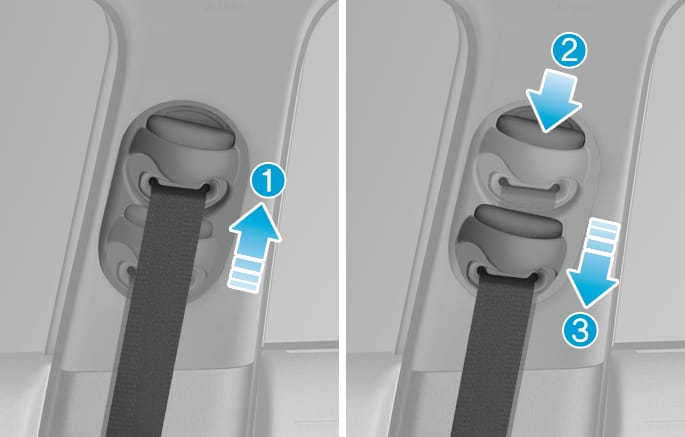
2C_AdjustSeatBeltHeight
-
Pull it up (1) to raise the height. To lower it, push it down (3) while pressing the height adjuster button (2). Release the button to lock the anchor in place. Try pushing the height adjuster down to make sure that it is locked in place.
To release your seat belt:
Press the release button (1) in the locking buckle.
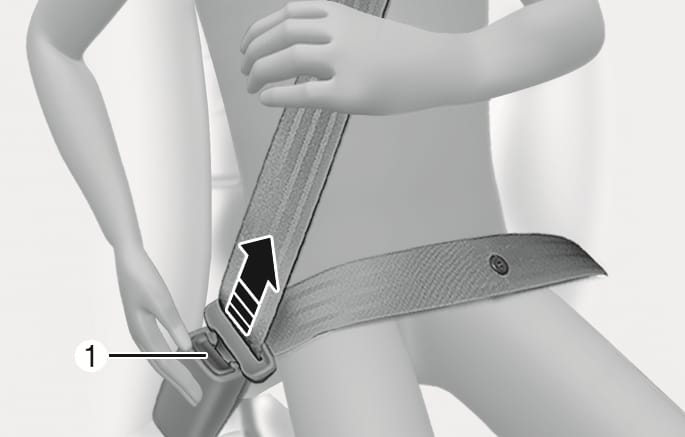
2C_SeatBeltRelease
Once released, the belt should automatically draw back into the retractor. If this does not happen, check the belt to be sure it is not twisted, then try again.
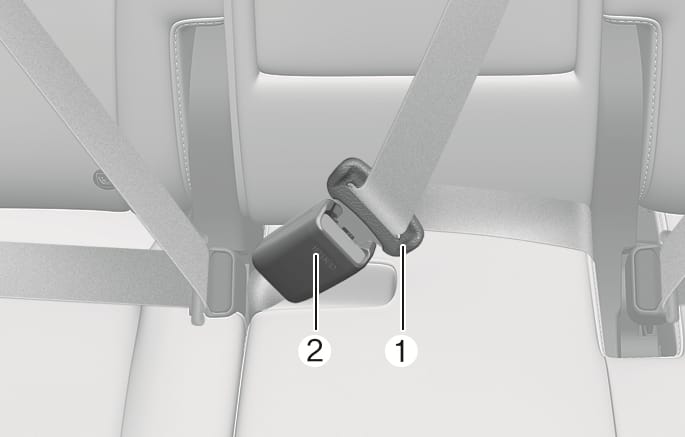
2C_RearCenterSeatBeltWearStep
Insert the tongue plate (1) into the buckle (2) until an audible "click" is heard, indicating the latch is locked. Pull the shoulder portion of the belt to snug the belt across your hips and remove slack. Make sure the seat belt is not twisted.
When using the rear center seat belt, use the buckle with the "CENTER" mark.
If you are not able to pull out the safety belt from the retractor, firmly pull the belt out and release it. After release, pull the belt out smoothly.
Make sure that the seatback is locked in place when using the rear center seat belt.
If not, the seatback may move when there is a sudden stop or collision, which could result in serious injury.
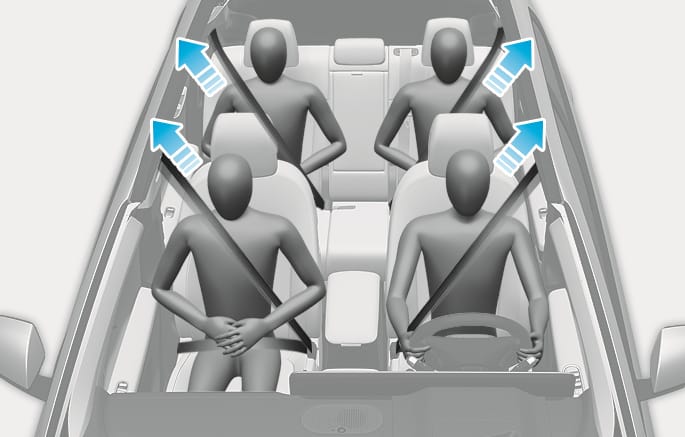
2C_RetractPretensioner
Your vehicle is equipped with driver's, front passenger's and rear passenger's (except rear center seat) pretensioner seat belts (retractor pretensioner). The pretensioner makes sure the seat belts fit tightly against your body in certain frontal or side collision(s). The pretensioner seat belts may be activated in some crashes where the frontal or side collision(s) is severe enough, together with the airbags.
When the vehicle stops suddenly, or if you try to lean forward too quickly, the seat belt retractor locks in place.
In some frontal collisions, the pretensioner activates and pulls the seat belt against your body.
If the system senses excessive tension on the driver or passenger's seat belt when the pretensioner system activates, the load limiter inside the retractor pretensioner will release some of the pressure on the affected seat belt.
To prevent serious injury or death:
-
Always wear your seat belt and sit properly in your seat.
-
Do not use the seat belt if it is loose or twisted.
-
Do not place anything near the buckle.
-
Always replace your pretensioners after activation or an accident.
-
NEVER inspect, service, repair or replace the pretensioners yourself. Have the pretensioners inspected, serviced, repaired or replaced by an authorized HYUNDAI dealer.
-
Do not hit the seat belt assemblies.
Do not touch the pretensioner seat belt assemblies for several minutes after they have been activated. When the pretensioner seat belt mechanism deploys during a collision, the pretensioner can become hot and can burn you.
Body work on the front area of the vehicle may damage the pretensioner seat belt system. Therefore, have the system serviced by an authorized HYUNDAI dealer.
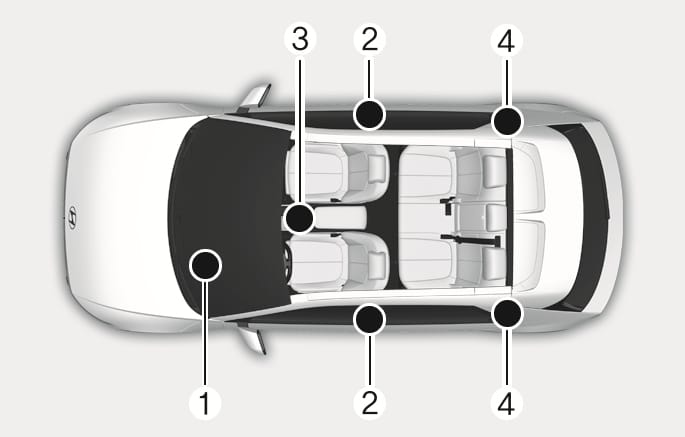
2C_PretensionerComponent
The Pretensioner Seat Belt System consists mainly of the following components. Their locations are shown in the illustration above:
- SRS air bag warning light
- Retractor pretensioner
- SRS control module
- Rear retractor pretensioner
The sensor that activates the SRS control module is connected with the pretensioner seat belts. The SRS air bag warning light on the instrument cluster will illuminate for about 3~6 seconds after the Start/Stop button is in the ON position, and then it should turn off.
If the pretensioner is not working properly, the warning light will illuminate even if the SRS air bag is not malfunctioning. If the warning light does not illuminate, stays illuminated or illuminates when the vehicle is being driven, have the pretensioner seat belts and/or SRS control module be inspected by an authorized HYUNDAI dealer as soon as possible.
-
Pretensioner seat belts may be activated in certain frontal or side collisions or rollover situations.
-
When the pretensioner seat belts are activated, a loud noise may be heard and fine dust, which may appear to be smoke, may be visible in the passenger compartment. These are normal operating conditions and are not hazardous.
-
Although it is non-toxic, the fine dust may cause skin irritation and should not be inhaled for prolonged periods. Wash all exposed skin areas thoroughly after an accident in which the pretensioner seat belts were activated.