Reverse Parking Collision-Avoidance Assist malfunction and limitations
2C_DriverAssistanceMalfunction
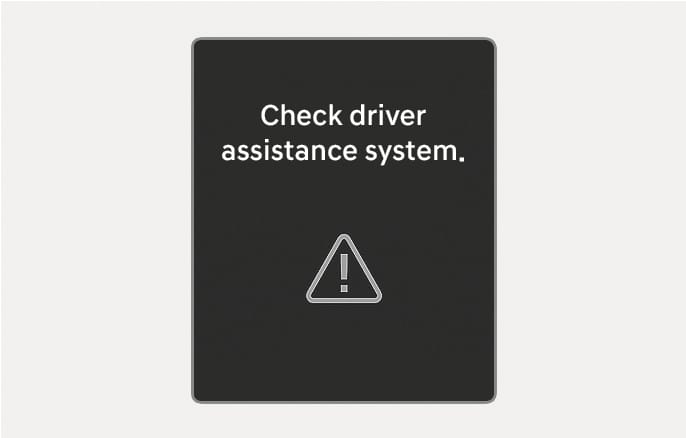
When Reverse Parking Collision-Avoidance Assist or other related functions are not working properly, the "Check driver assistance system" warning message appears on the instrument cluster, and Reverse Parking Collision-Avoidance Assist turns off automatically. We recommend that your vehicle be inspected by a HYUNDAI authorized repairer.
2C_DriverAssistanceLimitedCamera
2C_PDWDisabledInfo
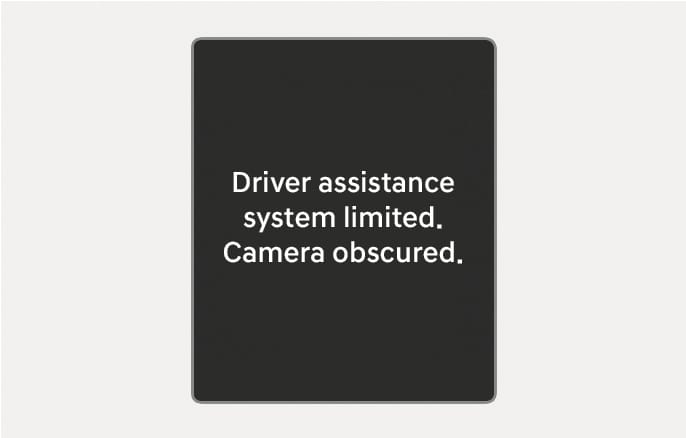
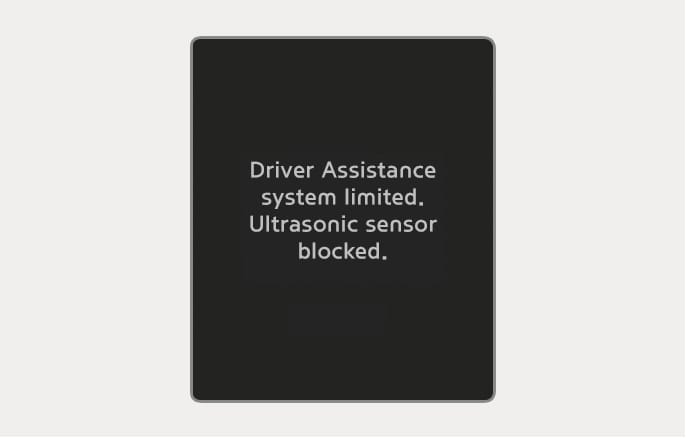
The "Driver assistance system limited. Camera obscured." or "Driver assistance system limited. Ultrasonic sensor blocked." warning message appears on the cluster if the following situations occur:
-
The wide-rear view camera or rear ultrasonic sensor(s) is covered with foreign material, such as snow or rain, etc.
-
There is inclement weather, such as heavy snow, heavy rain, etc.
If this occurs, Reverse Parking Collision-Avoidance Assist may turn off or may not operate properly. Check whether the wide-rear view camera and rear ultrasonic sensors are clean.
Reverse Parking Collision-Avoidance Assist may not assist braking or warn the driver even if there are pedestrians or objects under the following circumstances:
-
Problems with vehicle
-
Any non-factory equipment or accessory is installed
-
Your vehicle is unstable due to an accident or other causes
-
Bumper height or rear ultrasonic sensor installation has been modified
-
Wide-rear view camera(s) or ultrasonic sensor(s) is damaged
-
Wide-rear view camera(s) or the ultrasonic sensor(s) is stained with foreign material, such as snow, dirt, etc.
-
Wide-rear view camera(s) is obscured by a light source or by inclement weather, such as heavy rain, fog, snow, etc.
-
-
Problems with the surroundings
-
The surrounding is very bright or very dark
-
Outside temperature is very high or very low
-
The wind is either strong (above 20 km/h (12 mph)) or blowing perpendicular to the rear bumper
-
Objects generating excessive noise, such as vehicle horns, loud motorcycle vehicles or truck air brakes, are near your vehicle
-
An ultrasonic sensor with similar frequency is near your vehicle
-
The road is slippery or inclined
-
The image of the pedestrian in the front view camera is indistinguishable from the background
-
-
Problems with pedestrian or object
-
The pedestrians are difficult to detect
-
There is ground height difference between the vehicle and the pedestrian
-
The pedestrian is near the rear edge of the vehicle
-
The pedestrian is not standing upright
-
The pedestrian is either very short or very tall to detect
-
The pedestrian or cyclist is wearing clothing that easily blends into the background, making it difficult to detect
-
The pedestrian is wearing clothing that does not reflect ultrasonic waves well
-
Size, thickness, height, or shape of the object does not reflect ultrasonic waves well (for example, low object, narrow object, circular pillar, small pillar, corners of a square pillar, bush, curbs, carts, edge of a wall, etc.)
-
The pedestrian or the object is moving
-
The pedestrian or the object is very close to the rear of the vehicle
-
There is a large object such as a wall is behind the pedestrian or the object
-
The object is not located at the front or rear center of your vehicle
-
The object is not parallel to the rear bumper
-
The sensors cannot detect the pedestrians and objects
-
-
Problems with driving condition
-
The driver drives the vehicle immediately after shifting to R (Reverse) or D (Drive)
-
The driver accelerates or circles the vehicle
-
The vehicle is driven immediately after starting the vehicle
-
Take the following precautions when using Reverse Parking Collision-Avoidance Assist:
-
Always exercise extreme caution while driving. The driver is responsible for braking and safe driving.
-
Always pay attention to road and traffic conditions while driving, whether or not there is a warning.
-
Always look around your vehicle to make sure there are no pedestrians or objects before moving the vehicle.
-
The performance of Reverse Parking Collision-Avoidance Assist may differ under certain conditions. If vehicle speed is above 4 km/h (2 mph), Reverse Parking Collision-Avoidance Assist will provide collision avoidance assist only when pedestrians are detected. Always look around and pay attention when driving your vehicle.
-
Reverse Parking Collision-Avoidance Assist may operate differently under certain conditions. If the vehicle moves forward and backward repeatedly, Reverse Parking Collision-Avoidance Assist may fail to assist braking or to warn the driver. Always pay attention when driving your vehicle.
-
Some objects may not be detected by the rear ultrasonic sensors due to the objects distance, size or material, all of which can limit the effectiveness of the sensor.
-
Reverse Parking Collision-Avoidance Assist may not operate properly or may operate unnecessarily depending on the road conditions and the surroundings.
-
Do not solely rely on Parking Collision-Avoidance Assist. Doing so may lead to vehicle damage or injuries.
-
Noise may be heard when sudden braking occurs to avoid a collision.
-
If any other warning sound such as the seat belt warning chime is already generated, Parking Collision-Avoidance Assist warning may not sound.
-
Parking Collision-Avoidance Assist may not work properly if the bumper has been damaged, replaced or repaired.
-
Parking Collision-Avoidance Assist may not operate properly if interfered by strong electromagnetic waves.
-
Playing the vehicle audio system at high volume may prevent passengers from hearing Parking Collision-Avoidance Assist warning sounds.
-
Turn off Parking Collision-Avoidance Assist when towing a trailer. If towing and moving in reverse, Parking Collision-Avoidance Assist will activate as it detects the trailer.
-
The brake control may not operate properly depending on the status of ESC (Electronic Stability Control).
There will only be a warning when:
-
The ESC (Electronic Stability Control) warning light is on
-
ESC (Electronic Stability Control) is engaged in a different function
-
Take the following precautions to maintain optimal performance of the detecting sensors:
-
Always keep the wide-rear view cameras and ultrasonic sensors clean.
-
Do not use any cleanser containing acid or alkaline detergents when cleaning the camera lens. Use only a mild soap or neutral detergent, and rinse thoroughly with water.
-
Do not spray the wide-rear view cameras or the rear ultrasonic sensors or their surrounding area directly with a high pressure washer. It may cause the wide angle cameras or the ultrasonic sensors to malfunction.
-
Do not apply objects, such as a bumper sticker or a bumper guard, near the wide angle cameras or ultrasonic sensors or apply paint to the bumper. Doing so may adversely affect the performance of Parking Collision-Avoidance Assist.
-
Never disassemble or apply impact on the wide angle cameras or the ultrasonic sensors components.
-
Do not apply unnecessary force on the wide-rear view cameras or the ultrasonic sensors. Reverse Parking Collision-Avoidance Assist may not operate properly if the wide angle cameras or the ultrasonic sensor(s) is forcibly moved out of proper alignment. We recommend that your vehicle be inspected by a HYUNDAI authorized repairer.
Reverse Parking Collision-Avoidance Assist can detect a pedestrian or an object when:
-
A pedestrian is standing behind the vehicle
-
A large obstacle, such as a vehicle, is parked in the rear center of your vehicle