Forward Collision-Avoidance Assist malfunction and limitations
2C_DriverAssistanceMalfunction
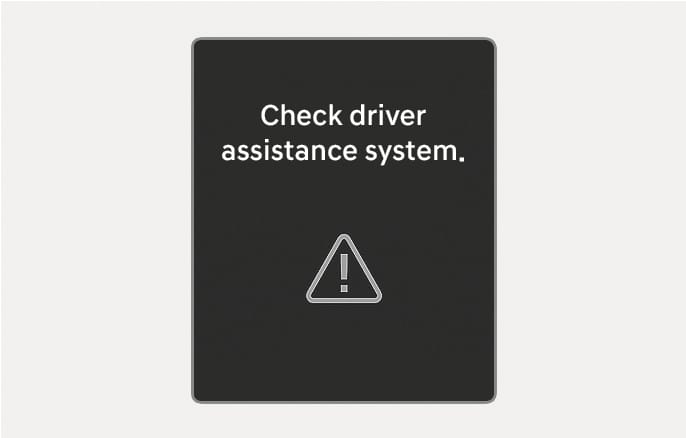
When Forward Collision-Avoidance Assist is not working properly, the "Check driver assistance system" warning message will appear, and the (
2C_DriverAssistanceLimitedCamera
2C_DriverAssistanceLimitedRadar
When the front windshield where the front view camera is located, front radar cover, bumper or sensor is covered with foreign material, such as snow or rain, it can reduce the detecting performance and temporarily limit or disable Forward Collision-Avoidance Assist.
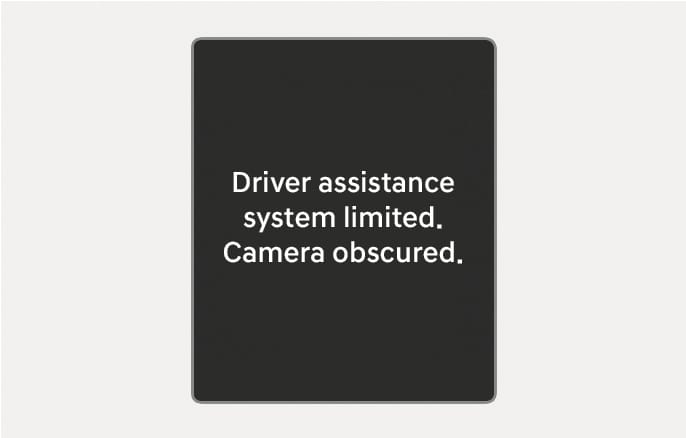
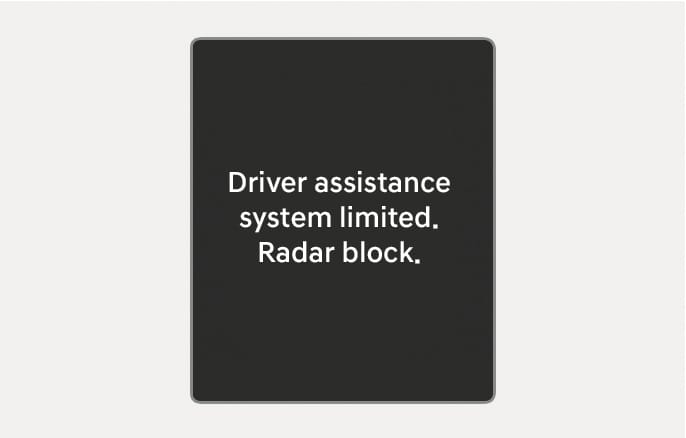
If this occurs the "Driver assistance system limited. Camera obscured" or the "Driver assistance system limited. Radar blocked" warning message, and the (
Forward Collision-Avoidance Assist will operate properly when snow, rain or foreign material is removed.
If Forward Collision-Avoidance Assist does not operate properly after obstruction (snow, rain, or foreign material) is removed (including trailer, carrier, etc., from the rear bumper), we recommend that your vehicle be inspected by an authorized HYUNDAI dealer.
-
Even though the warning message or warning light does not appear on the cluster, Forward Collision-Avoidance Assist may not properly operate.
-
Forward Collision-Avoidance Assist may not properly operate in an area (for example, open terrain), where any objects are not detected after turning ON the engine.
Forward Collision-Avoidance Assist may not operate properly, or it may operate unexpectedly under the following circumstances:
-
The detecting sensor or the surroundings are contaminated or damaged
-
The temperature around the front view camera is high or low due to surrounding environment
-
The camera lens is contaminated due to tinted, filmed or coated windshield, damaged glass, or sticky foreign material (sticker, bug, etc.) on the glass
-
Moisture is not removed or frozen on the windshield
-
Washer fluid is continuously sprayed, or the wiper is on
-
Driving in heavy rain or snow, or thick fog
-
The field of view of the front view camera is obstructed by sun glare
-
Street light or light from an oncoming traffic is reflected on the wet road surface, such as a puddle on the road
-
An object is placed on the dashboard
-
Your vehicle is being towed
-
The surrounding is very bright
-
The surrounding is very dark, such as in a tunnel, etc.
-
The brightness changes suddenly, for example when entering or exiting a tunnel
-
The brightness outside is low, and the headlamps are not on or are not bright
-
Driving through steam, smoke or shadow
-
Only part of the vehicle, powered two-wheeler pedestrian or cyclist is detected
-
The vehicle or powered two-wheeler in front is a bus, heavy truck, truck with an unusually shaped cargo, trailer, etc.
-
The vehicle or powered two-wheeler in front has no tail lights, tail lights are located unusually, etc.
-
The brightness outside is low, and the tail lamps are not on or are not bright
-
The rear of the front vehicle is small or the vehicle does not look normal, such as when the vehicle is tilted, overturned, or the side of the vehicle is visible, etc.
-
The front vehicle's ground clearance is low or high
-
A vehicle, powered two-wheeler, pedestrian or cyclist suddenly cuts in front
-
The bumper around the front radar is impacted, damaged or the front radar is out of position
-
The temperature around the front radar is high or low
-
Driving through a tunnel or iron bridge
-
Driving in vast areas where there are few vehicles or structures (for example, desert, meadow, suburb, etc.)
-
Driving near areas containing metal substances, such as a construction zone, railroad, etc.
-
A material is near that reflects very well on the front radar, such as a guardrail, nearby vehicle, etc.
-
The cyclist in front is on a bicycle made of material that does not reflect on the front radar
-
The vehicle or powered two-wheeler in front is detected late
-
The vehicle or powered two-wheeler in front is suddenly blocked by an obstacle
-
The vehicle or powered two-wheeler in front suddenly changes lane or suddenly reduces speed
-
The vehicle or powered two-wheeler in front is bent out of shape
-
The front vehicle or powered two-wheeler speed is fast or slow
-
The vehicle or powered two-wheeler in front steers in the opposite direction of your vehicle to avoid a collision
-
With a vehicle or powered two-wheeler in front, your vehicle changes lane at low speed
-
The vehicle in front is covered with snow
-
You are departing or returning to the lane
-
Unstable driving
-
You are on a round about and the vehicle or powered two-wheeler in front is not detected
-
You are continuously driving in a circle
-
The vehicle in front has an unusual shape
-
The vehicle in front is driving uphill or downhill
-
The pedestrian or cyclist is not fully detected, for example, if the pedestrian is leaning over or is not fully walking upright
-
The pedestrian or cyclist is wearing clothing or equipment that makes it difficult to detect
-
Rear wheel steering system (if equipped) is disabled
2C_FrontViewImage
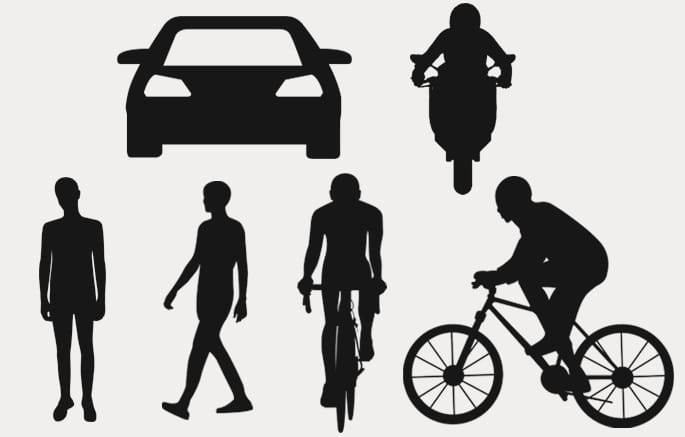
The illustration above shows the image the front view camera and front radar are capable of detecting as a vehicle, powered two-wheeler, pedestrian and cyclist.
-
The pedestrian or cyclist in front is moving very quickly
-
The pedestrian or cyclist in front is short or is posing a low posture
-
The pedestrian or cyclist in front has impaired mobility
-
The pedestrian or cyclist in front is moving intersected with the driving direction
-
There is a group of pedestrians, cyclists or a large crowd in front
-
The pedestrian or cyclist is wearing clothing that easily blends into the background, making it difficult to detect
-
The pedestrian or cyclist is difficult to distinguish from the similarly shaped structure in the surroundings
-
You are driving by a pedestrian, cyclist, traffic signs, structures, etc., near the intersection
-
Driving in a parking lot
-
Driving through a tollgate, construction area, unpaved road, partial paved road, uneven road, speed bumps, etc.
-
Driving on an incline road, curved road, etc.
-
Driving through a roadside with trees or streetlights
-
The adverse road conditions cause excessive vehicle vibrations while driving
-
Your vehicle height is low or high due to heavy loads, abnormal tire pressure, etc.
-
Driving through a narrow road where trees or grass are overgrown
-
There is interference by electromagnetic waves, such as driving in an area with strong radio waves or electrical noise
-
The vehicle is installed with a snow chain, spare tyre or different size wheel.
-
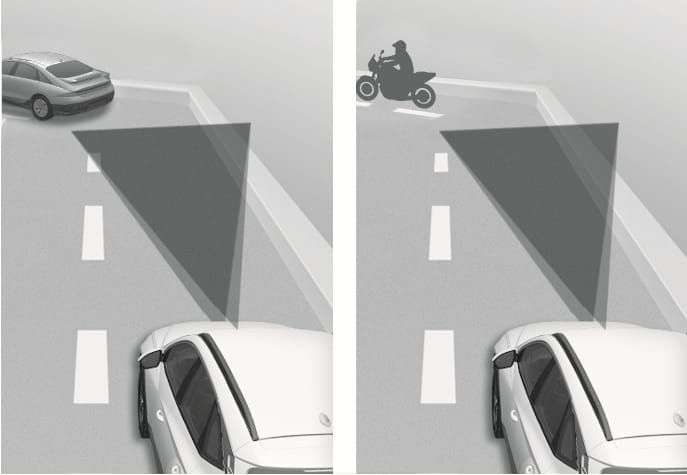
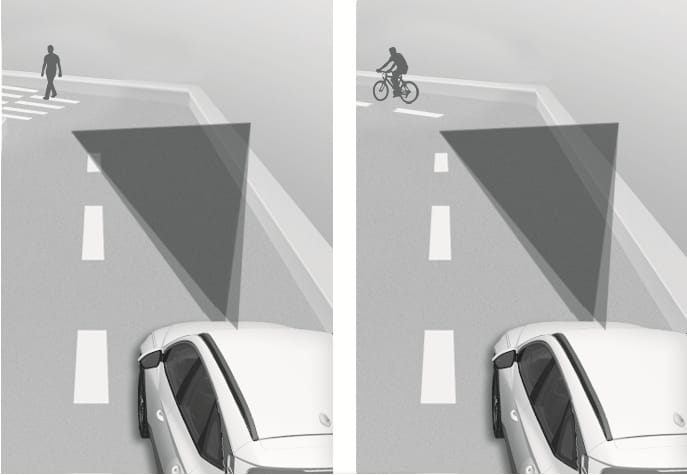
Driving on a curved road
2C_FCADrivingOnCurveLoad
2C_FCADrivingOnCurveLoad_2
Forward Collision-Avoidance Assist may not detect other vehicles, powered two-wheelers, pedestrians or cyclists in front of you when driving on curved roads adversely affecting the performance of the sensors. This may result in no warning, braking assist or steering assist (if equipped) when necessary.
When driving on a curve, you must maintain a safe braking distance, and if necessary, steer the vehicle and depress the brake pedal to reduce your driving speed in order to maintain a safe distance.
2C_FCADrivingOnCurveLoad_3
2C_FCADrivingOnCurveLoad_4
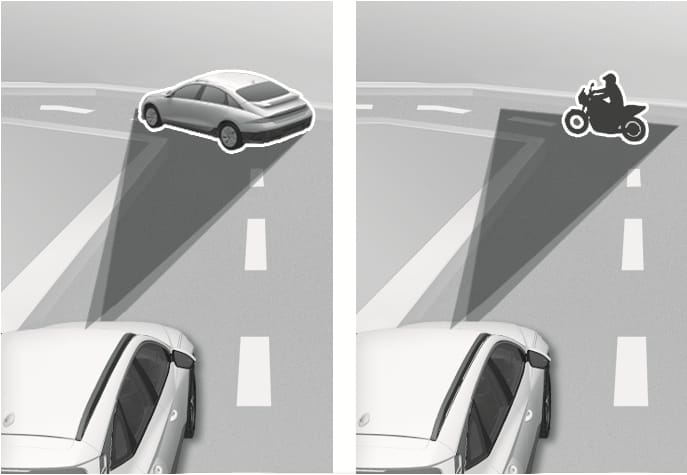
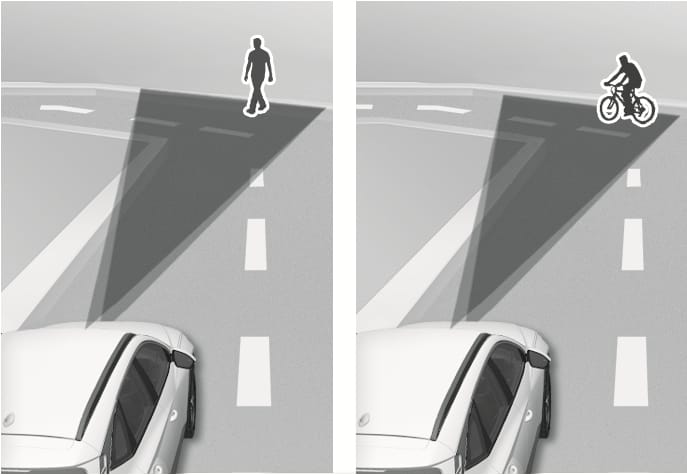
Forward Collision-Avoidance Assist may detect a vehicle, powered two-wheeler, pedestrian or cyclist in the next lane or outside the lane when driving on a curved road.
If this occurs, Forward Collision-Avoidance Assist may unnecessarily warn the driver and control the brake or steering wheel (if equipped). Always check the traffic conditions around the vehicle.
-
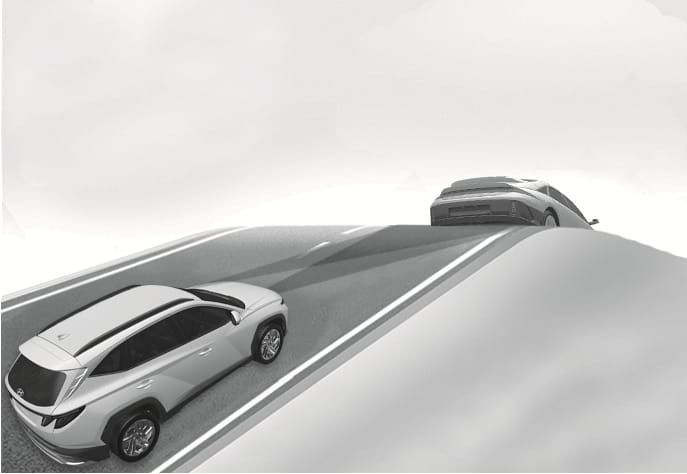
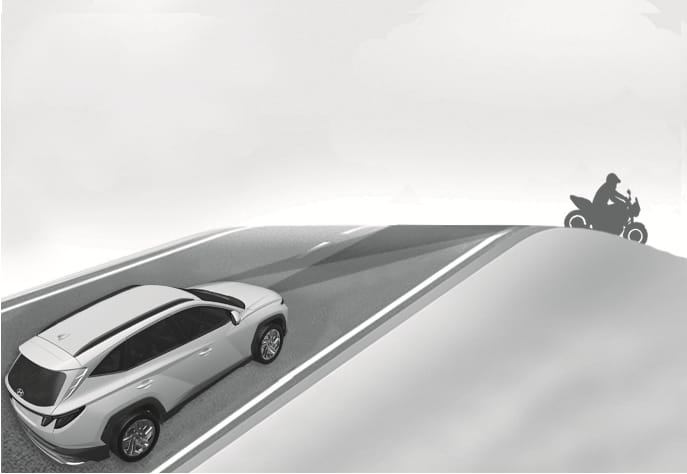
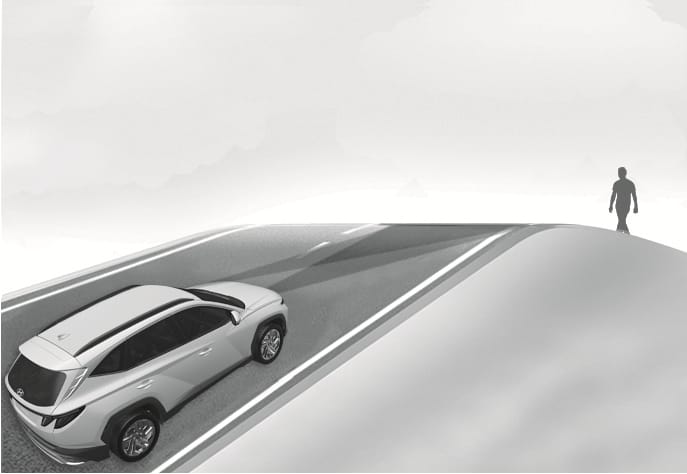
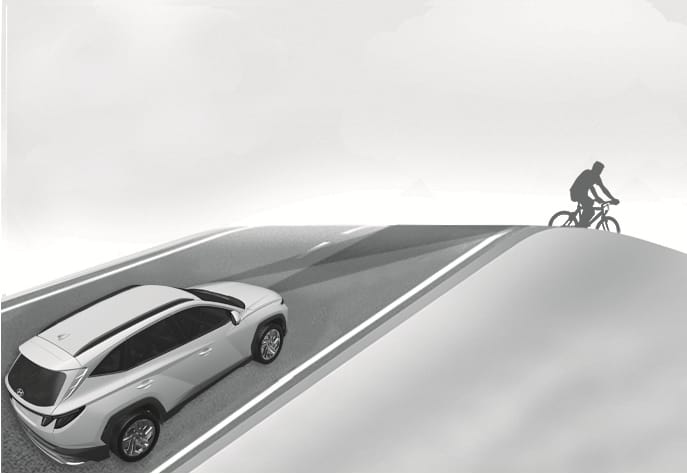
Driving on an inclined road
2C_FCADrivingOnInclinedLoad
2C_FCADrivingOnInclinedLoad_2
2C_FCADrivingOnInclinedLoad_3
2C_FCADrivingOnInclinedLoad_4
Forward Collision-Avoidance Assist may not detect other vehicles, powered two-wheelers, pedestrians or cyclists in front of you while driving uphill or downhill, adversely affecting the performance of the sensors.
This may result in unnecessary warning, braking assist or steering assist (if equipped) or no warning, braking assist or steering assist (if equipped) when necessary.
Also, vehicle speed may rapidly decrease when a vehicle, powered two-wheeler, pedestrian or cyclist ahead is suddenly detected.
Always have your eyes on the road while driving uphill or downhill and if necessary, steer your vehicle and depress the brake pedal to reduce your driving speed in order to maintain a safe distance.
-
Changing lanes
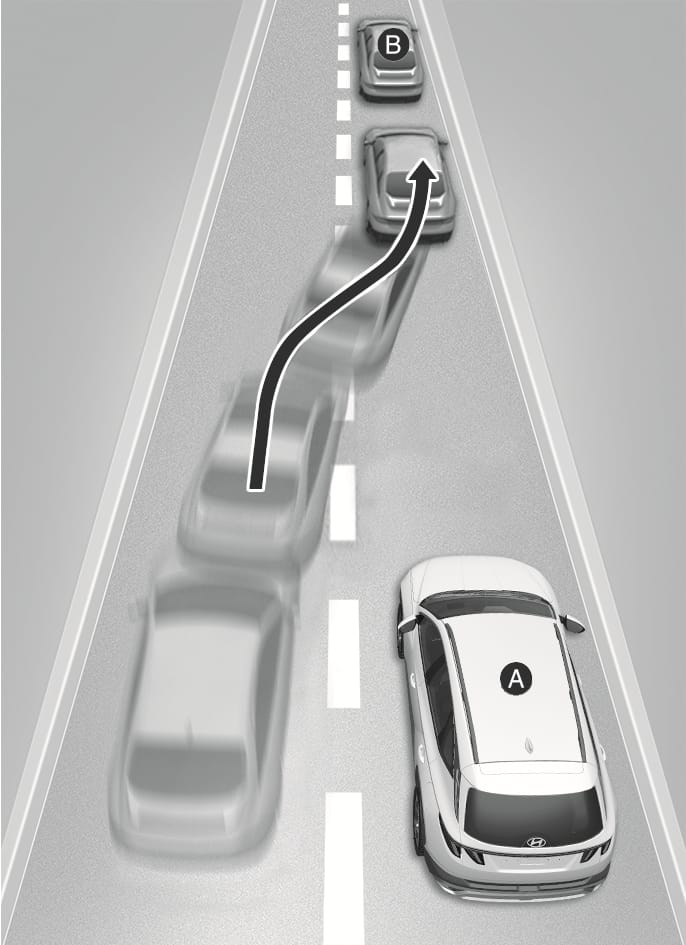
2C_FCAChangingLane
- Your vehicle
- Lane changing vehicle
When a vehicle moves into your lane from an adjacent lane, it cannot be detected by the sensor until it is in the sensor's detection range. Forward Collision-Avoidance Assist may not immediately detect the vehicle when the vehicle changes lanes abruptly. In this case, you must maintain a safe braking distance, and if necessary, steer your vehicle and depress the brake pedal to reduce your driving speed in order to maintain a safe distance.
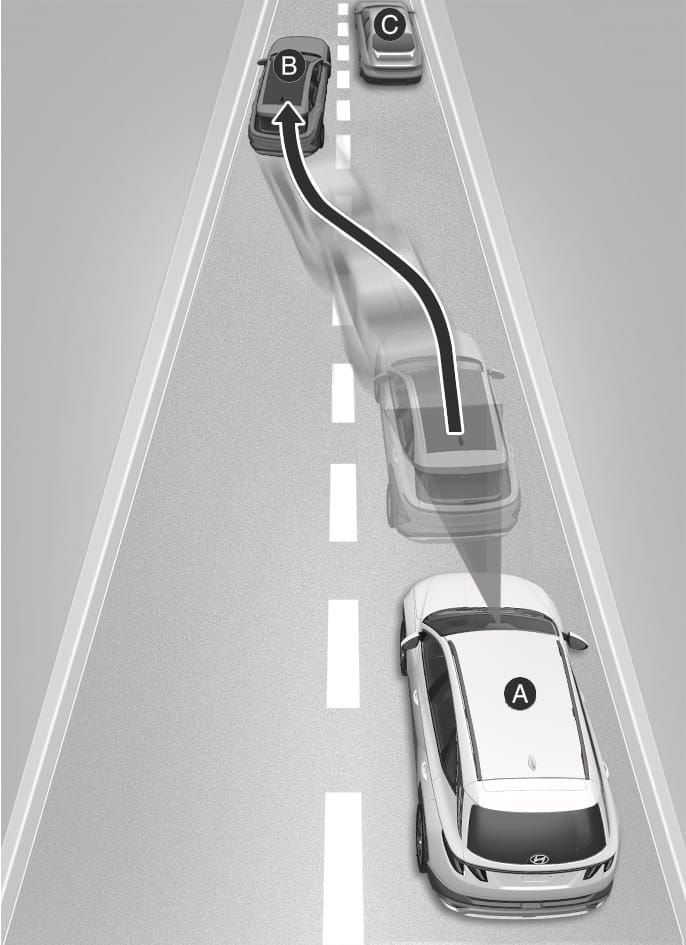
2C_FCAChangingLane_2
- Your vehicle
- Lane changing vehicle
- Same lane vehicle
When a vehicle in front of you merges out of the lane, Forward Collision-Avoidance Assist may not immediately detect the vehicle that is now in front of you. In this case, you must maintain a safe braking distance, and if necessary, steer your vehicle and depress the brake pedal to reduce your driving speed in order to maintain a safe distance.
-
Detecting vehicle
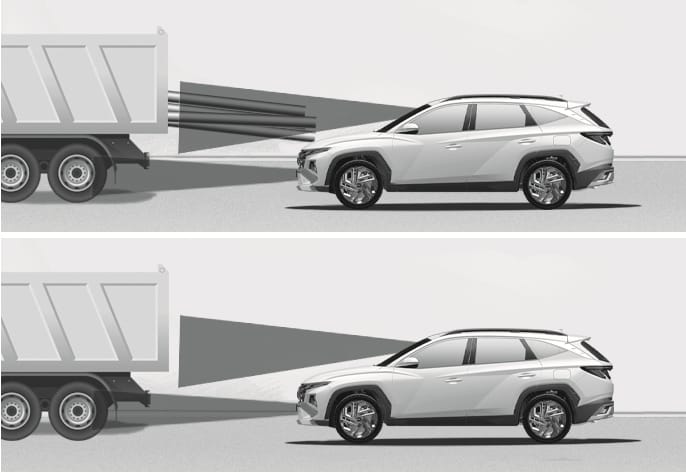
2C_FCADetectingVehicle
If the vehicle in front of you has cargo that extends rearward from the cab, or when the vehicle in front of you has higher ground clearance, additional special attention is required. Forward Collision-Avoidance Assist may not be able to detect the cargo extending from the vehicle. In these instances, you must maintain a safe braking distance from the rearmost object, and if necessary, steer your vehicle and depress the brake pedal to reduce your driving speed in order to maintain distance.
-
When you are towing a trailer or another vehicle, turn off Forward Collision-Avoidance Assist for safety reasons.
-
Forward Collision-Avoidance Assist may operate if objects that are similar in shape or characteristics to vehicles, powered two-wheelers, pedestrians and cyclists are detected.
-
Forward Collision-Avoidance Assist does not operate on bicycles, or smaller wheeled objects, such as luggage bags, shopping carts, or strollers.
-
Forward Collision-Avoidance Assist may not operate properly if interfered by strong electromagnetic waves.
-
Forward Collision-Avoidance Assist may not operate for 15 seconds after the vehicle is started, or the front view camera is initialized.
For limitations in the driver's blind spot areas and precautions for the rear corner radars, refer to the "Blind-Spot Collision-Avoidance Assist (BCA)" section in this chapter.