Automatic transmission operation (Rotary gear shift dial type)
The automatic transmission has six (or eight) forward speeds and one reverse speed.
The individual speeds are selected automatically in the D (Drive) position.
The automatic transmission shift dial or interior parts might get hot when a vehicle is parked outside during hot weather. Always be careful when the vehicle is hot.
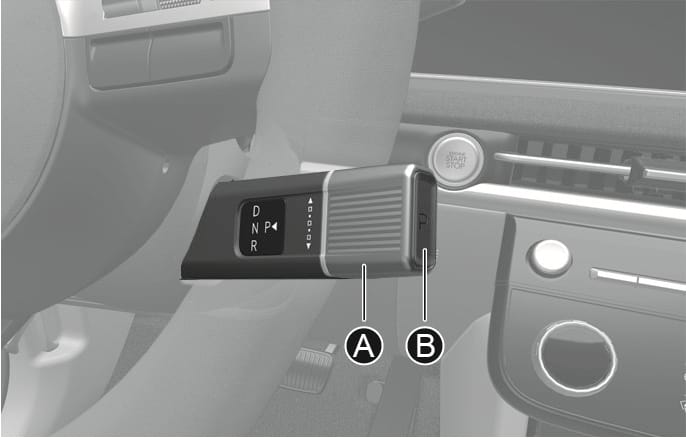
2C_ShiftButtonOverview
- Rotary gear shift dial
- P button
Depress the brake pedal whenever rotating the gear shift dial or shifting to P.
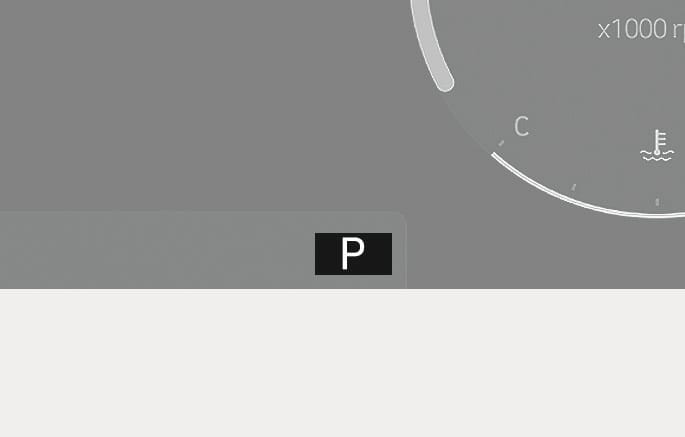
The indicator in the instrument cluster displays the shift position when the Engine Start/Stop button is in the ON position.
To reduce the risk of serious injury or death:
-
ALWAYS check the surrounding areas near your vehicle for people, especially children, before shifting a vehicle into D (Drive) or R (Reverse).
-
Before leaving the driver's seat, always make sure the vehicle is shifted to the P (Park) position, then apply the parking brake, then place the Engine Start/Stop button to the OFF position. Unexpected and sudden vehicle movement can occur if these precautions are not followed.
-
When using the paddle shifter (manual shift mode), do not use engine braking (shifting from a high gear to lower gear) rapidly on slippery roads. The vehicle may slip causing an accident.
P (Park)
Always come to a complete stop before shifting into P (Park).
2C_ClusterShiftPositionLamp
2C_PressPButton
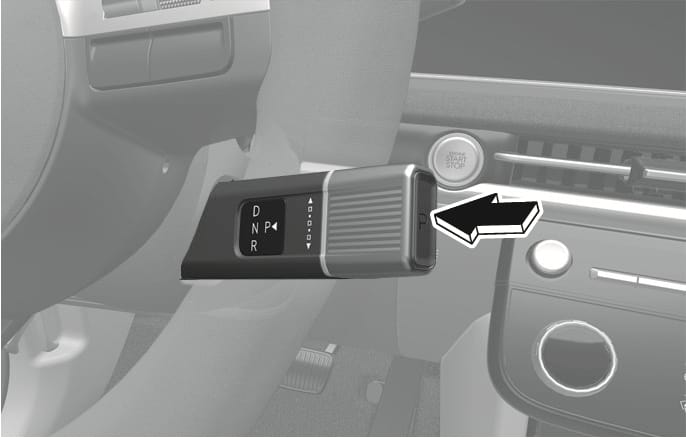
To shift the gear to P (Park), press the P button while depressing the brake pedal.
If you turn the engine off in R (Reverse), N (Neutral) or D (Drive), the gear will automatically shift to P (Park).
-
Shifting into P (Park) while the vehicle is in motion may cause you to lose control of the vehicle.
-
After the vehicle has stopped, always make sure the vehicle is in P (Park), apply the parking brake, and turn the engine off.
-
When parking on an incline, shift the gear to P (Park) and apply the parking brake to prevent the vehicle from rolling downhill.
Automatic gear shift to P (Park)
The gear is shifted to P (Park) automatically for safety reasons under the following conditions:
-
When the engine is turned off with the gear in R (Reverse), D (Drive) or N (Neutral).
-
When the driver’s door is open with the engine running, the gear in R (Reverse), D (Drive) or N (Neutral) and the vehicle at a standstill.
-
When the driver’s door is open with the gear in N (Neutral) and the vehicle is off.
In situations the gear must be in P (Park), always check if the gear is shifted to P (Park) by checking the cluster.
R (Reverse)
Use this position to drive the vehicle rearward.
2C_ShiftButtonRPosition
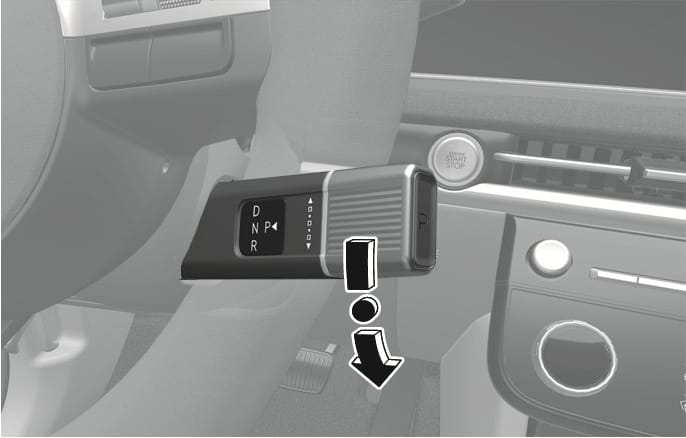
To shift the gear R (Reverse), rotate the rotary gear shift dial to R (Reverse) while depressing the brake pedal.
When the vehicle is stopped in the R (Reverse) position, if you open the driver's door, the gear will automatically shift to P (Park).
However, if the vehicle is in motion, the gear may not automatically shift to P (Park) to prevent automatic transmission damage.
Always come to a complete stop before shifting into or out of R (Reverse); you may damage the transmission if you shift into R (Reverse) while the vehicle is in motion.
N (Neutral)
The wheels and transmission are not engaged.
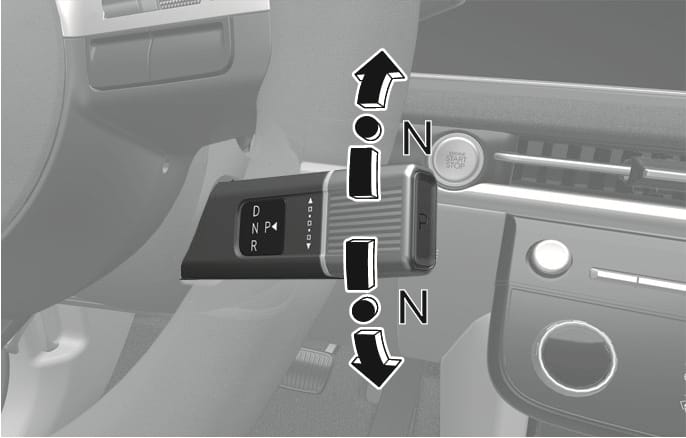
2C_ShiftButtonNPosition
To shift the gear to N (Neutral), rotate the rotary gear shift dial to N (Neutral) from R (Reverse) or D (Drive) while depressing the brake pedal.
Always depress the brake pedal when you are shifting from N (Neutral) to another gear.
If you turn the engine off in N (Neutral), the gear will automatically shift to P (Park).
The engine can be started with the gear in N (Neutral), but for you safety, be sure to start the engine with the gear in P (Park).
D (Drive)
This is the normal driving position.
The transmission will automatically shift through an 6(or 8)-gear sequence, providing the best fuel economy and power.
For extra power when passing another vehicle or driving uphill, depress the accelerator pedal further until you feel the transmission downshift to a lower gear.
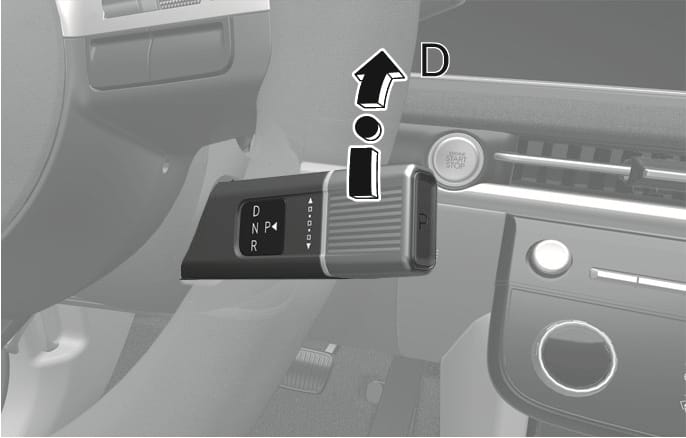
2C_ShiftButtonDPosition
To shift the gear D (Drive), rotate the rotary gear shift dial to D (Drive) while depressing the brake pedal.
When the vehicle is stopped in the D (Drive) position, if you open the driver's door with the seat belt unfastened, the gear will automatically shift to P (Park).
However, if the vehicle is in motion, the gear may not automatically shift to P (Park) to prevent automatic transmission damage.
When you start after stopping on a steep incline, even if the gear is in D (Drive), if you do not depress the accelerator or brake pedal, the vehicle may roll backwards, which can cause an accident.
Always come to a complete stop before shifting into D (Drive).
You cannot shift gears, when the battery is discharged.
In emergencies, do the following to shift the gear to N (Neutral) on a level ground.
-
Connect the battery cables from another vehicle or from a another battery to the jump-starting terminals inside the engine compartment.
For more information, refer to the “Jump starting” section in chapter 8.
-
Release the Electronic Parking Brake (EPB) with the Engine Start/Stop button in the ON position.
-
Shift the gear to the N (Neutral) position.
For your safety, the automatic transmission has a shift-lock system which prevents shifting the transmission from P (Park) into R (Reverse) or D (Drive) unless the brake pedal is depressed.
To shift from P (Park) or N (Neutral) into R (Reverse) or D (Drive):
-
Depress and hold the brake pedal.
-
Start the engine.
-
Shift gear while depressing the brake pedal.