Electronic parking brake (EPB)
To apply EPB (Electronic Parking Brake):
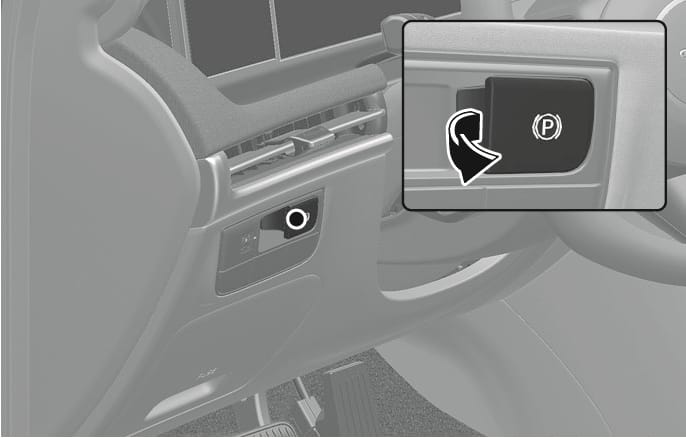
2C_EPBEngage
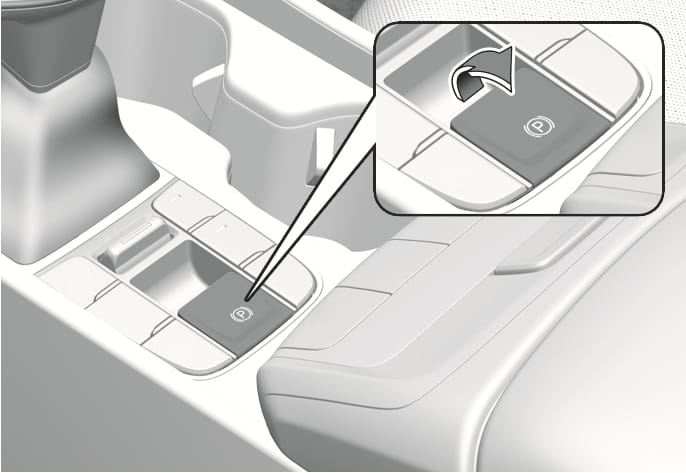
2C_EPBEngage_2
-
Depress and hold the brake pedal.
-
Pull up the EPB switch.
Make sure the Parking Brake warning light comes on.
EPB (Electronic Parking Brake) may be automatically applied when:
-
Requested by other systems
-
The driver turns the vehicle off while Auto Hold is operating.
Emergency braking
If there is a problem with the brake pedal while driving, emergency braking is possible by pulling up and holding the EPB switch. Braking is possible only while you are holding the EPB switch. However, braking distance will be longer than normal.
To reduce the risk of SERIOUS INJURY or DEATH, do not operate the EPB while the vehicle is moving except in an emergency situation. It could damage the brake system and lead to an accident.
If you continuously notice a noise or burning smell when the EPB is used for emergency braking, we recommend that your vehicle be inspected by an authorized HYUNDAI dealer.
During emergency braking, the Parking Brake warning light will illuminate to indicate that the system is operating.
To release EPB (Electronic Parking Brake):
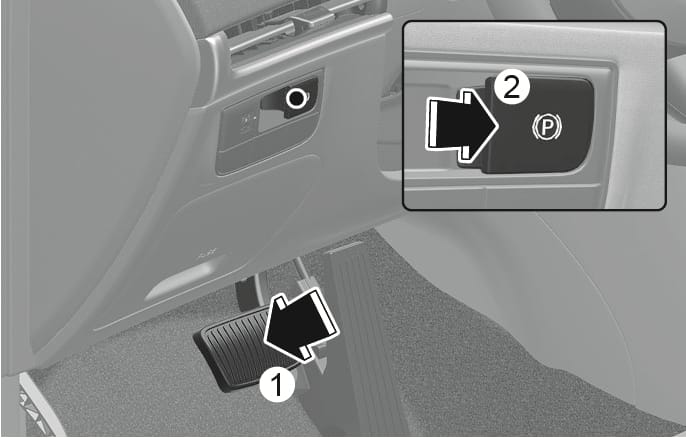
2C_EPBRelease
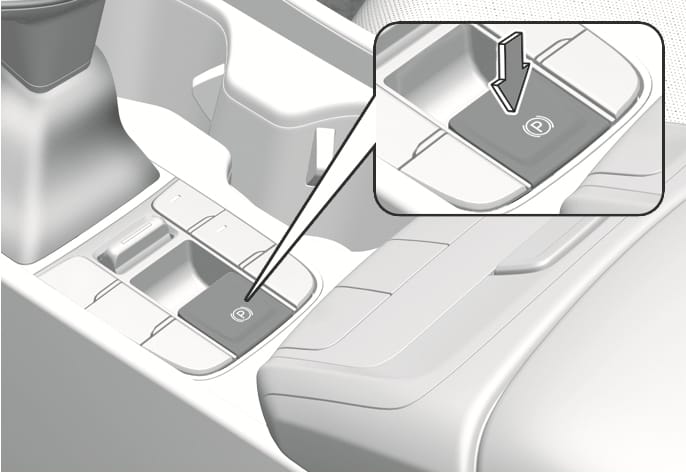
2C_EPBRelease_2
-
Place the Engine Start/Stop button to the ON or START position.
-
Press the EPB switch while depressing the brake pedal.
Make sure the Parking Brake warning light goes off.
To release EPB (Electronic Parking Brake) automatically:
-
Gear in P (Park)
With the engine running depress the brake pedal and shift out of P (Park) to R (Reverse) or D (Drive).
-
Gear in N (Neutral)
With the engine running depress the brake pedal and shift out of N (Neutral) to R (Reverse) or D (Drive).
-
Satisfy the following conditions
-
Ensure seat belts are fastened and the doors, hood and trunk are closed.
-
With the engine running, depress the brake pedal and shift out of P (Park) to R (Reverse), D (Drive) or Manual shift mode.
-
Depress the accelerator pedal.
Make sure the Parking Brake warning light goes off.
-
If the Parking Brake warning light is still on even though the EPB has been released, we recommend that your vehicle be inspected by an authorized HYUNDAI dealer.
-
Do not drive your vehicle with EPB applied. It may cause excessive brake pad and brake rotor wear.
-
For your safety, you can engage EPB even though the Engine Start/Stop button is in the OFF position (only if battery power is available), but you cannot release it.
-
For your safety, depress the brake pedal and release the parking brake manually with the EPB switch when you drive downhill or when backing up the vehicle.
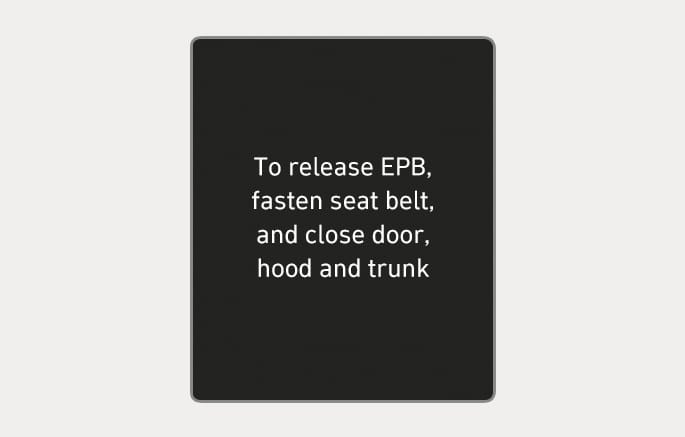
To release EPB, fasten seatbelt and close door, hood and trunk
2C_EPBEnableToReleaseInfo
-
If you try to drive with EPB applied, a warning will sound and a message will appear.
-
If the driver's seat belt is unfastened and the engine hood or trunk is opened, a warning will sound and a message will appear.
-
If there is a problem with the vehicle, a warning may sound and a message may appear.
If the situation occurs, depress the brake pedal and release EPB by pressing the EPB switch.
-
Whenever leaving the vehicle or parking, always come to a complete stop and continue to depress the brake pedal.
Shift the gear into P (Park), pull the EPB switch, and to turn the vehicle off. Take the Key with you when leaving the vehicle.
Vehicles not fully engaged in P (Park) with the parking brake set are at risk for moving inadvertently and causing injury to yourself or others.
-
NEVER allow anyone who is unfamiliar with the vehicle to touch the EPB switch. If EPB is released unintentionally, serious injury may occur.
-
Only release EPB when you are seated inside the vehicle with your foot firmly on the brake pedal.
-
Do not apply the accelerator pedal while the parking brake is engaged. If you depress the accelerator pedal with EPB engaged, a warning will sound and a message will appear. Damage to the parking brake may occur.
-
Driving with the parking brake on can overheat the braking system and cause premature wear or damage to brake parts. Make sure EPB is released and the Parking Brake warning light is off before driving.
-
A clicking sound may be heard while operating or releasing the EPB. These conditions are normal and indicate that EPB is functioning properly.
-
When leaving your keys with a parking attendant or assistant, make sure to inform him/her how to operate EPB.
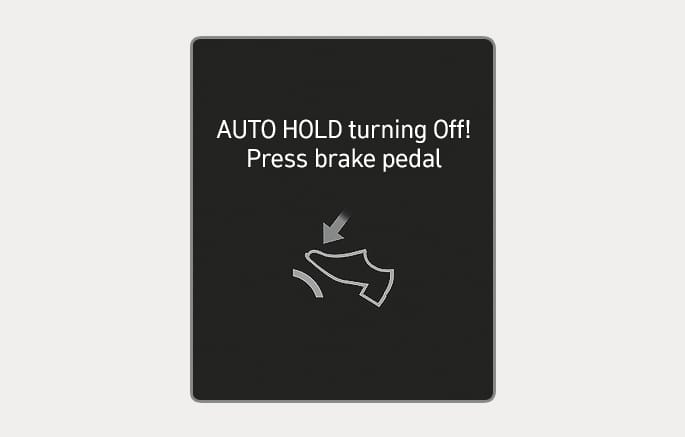
AUTO HOLD turning Off! Press brake pedal
2C_AutoHoldPressureBreakInfo
When the conversion from Auto Hold to EPB is not working properly a warning will sound and a message will appear.
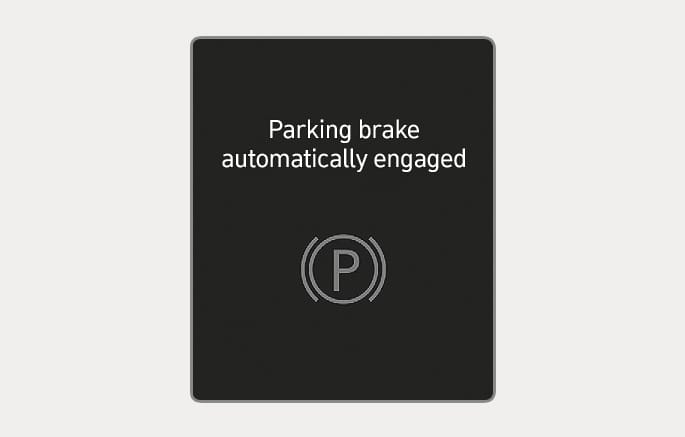
Parking brake automatically engaged
2C_AutoHoldAutoEngageEPBInfo
When EPB is applied while Auto Hold is activated, a warning will sound and a message will appear.
Electronic Parking Brake (EPB) warning light illuminates if the Engine Start/Stop button placed to the ON position and goes off in about 3 seconds if the system is operating normally.
If the EPB warning light remains on, comes on while driving, or does not come on when the Engine Start/Stop button is placed to the ON position, this indicates that the EPB may have malfunctioned.
If this occurs, we recommend that your vehicle be inspected by an authorized HYUNDAI dealer.
The EPB warning light may illuminate when the ESC indicator comes on to indicate that ESC is not working properly, but it does not indicate a malfunction of EPB.

WL_BreakWarningLamp_2
Check the Parking Brake warning light by placing the Engine Start/Stop button to the ON position.
Before driving, be sure the parking brake is released and the Parking Brake warning light is OFF.
If the Parking Brake warning light remains on after the parking brake is released while the engine is running, there may be a malfunction in the brake system. Immediate attention is necessary.
If at all possible, cease driving the vehicle immediately. If that is not possible, use extreme caution while operating the vehicle and only continue to drive the vehicle until you can reach a safe location.
When the EPB (Electronic Parking Brake) does not release
If the EPB does not release normally, we recommend that you contact an authorized HYUNDAI dealer by loading the vehicle on a flatbed tow truck and have the system checked.