System operation
-
Select the Face Level
 mode.
-
Set the air intake control to fresh mode.
-
Set the temperature control to the desired position.
-
Set the fan speed control to the desired speed.
-
Select the Floor Level
 mode.
-
Set the air intake control to fresh mode.
-
Set the temperature control to the desired position.
-
Set the fan speed control to the desired speed.
-
If desired, turn the air conditioning ON with the temperature control knob set to heat in order to dehumidify the air before it enters into the cabin.
If the windshield fog up, select the front windshield defroster button.
Operation Tips
-
To keep dust or unpleasant fumes from entering the vehicle through the ventilation system, temporarily set the air intake control to the recirculation mode. Be sure to return the control to fresh mode position when the irritation has passed to keep fresh air in the vehicle. This will help keep the driver alert and comfortable.
-
To prevent interior fog on the windshield, set the air intake control to fresh mode and fan speed to the desired position, turn on the air conditioning system, and adjust the temperature control to desired temperature.
OUS4051114
HYUNDAI Air Conditioning Systems are filled with R-134a or R-1234yf refrigerant.
-
Start the engine. Push the air conditioning button.
-
Select the Face Level
mode. -
Set the air intake control to Recirculation mode temporarily to allow the cabin to cool quickly. When the desired temperature in the cabin is reached, change the air intake control back to Fresh mode.
-
Adjust the fan speed control and temperature control to maintain maximum comfort.
OUS4011025
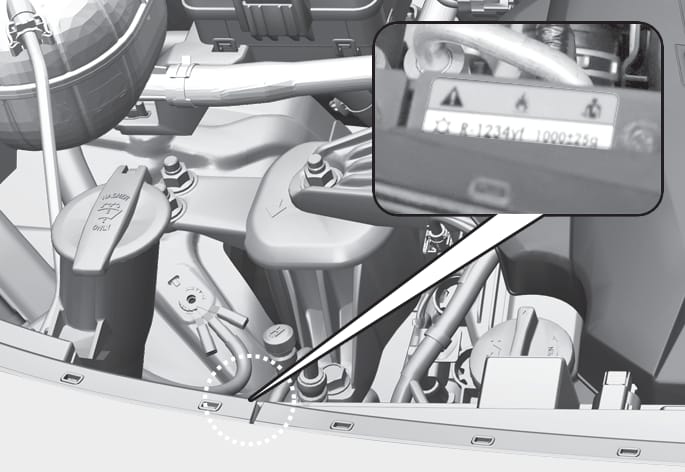
Your vehicle is filled with R-134a or R-1234yf according to the regulation in your country at the time of production. You can find out which air conditioning refrigerant is applied to your vehicle on the label located inside of the hood. Refer to chapter 5 for the location of the air conditioning refrigerant label.
-
When using the air conditioning system, monitor the temperature gauge closely while driving up hills or in heavy traffic when outside temperatures are high. Air conditioning system operation may cause engine overheating. Continue to use the fan but turn the air conditioning system off if the temperature gauge indicates engine overheating.
-
When opening the windows in humid weather air conditioning may create water droplets inside the vehicle. Since excessive water droplets may cause damage to electrical equipment, air conditioning should only be used with the windows closed.
Air conditioning system operation tips
-
If the vehicle has been parked in direct sunlight during hot weather, open the windows for a short time to let the hot air inside the vehicle escape.
-
After sufficient cooling has been achieved, switch back from recirculation mode to fresh mode.
-
To help reduce moisture inside of the windows on rainy or humid days, decrease the humidity inside the vehicle by operating the air conditioning system with the windows and sunroof closed.
-
During air conditioning system operation, you may occasionally notice a slight change in engine speed as the air conditioning compressor cycles. This is a normal system operation characteristic.
-
Use the air conditioning system every month for a few minutes to ensure maximum system performance.
-
When using the air conditioning system, you may notice clear water dripping (or even puddling) on the ground under the passenger side of the vehicle. This is a normal system operation characteristic.
-
If you operate the air conditioner excessively, the difference between the temperature of the outside air and that of the windshield could cause the outer surface of the windshield to fog up, causing loss of visibility. In this case, set the mode selection knob to the
position and set the fan speed control knob to the lowest speed setting.