Forward Collision-Avoidance Assist Operation
The basic function for Forward Collision-Avoidance Assist is to warn and help control the vehicle depending on the collision risk level.
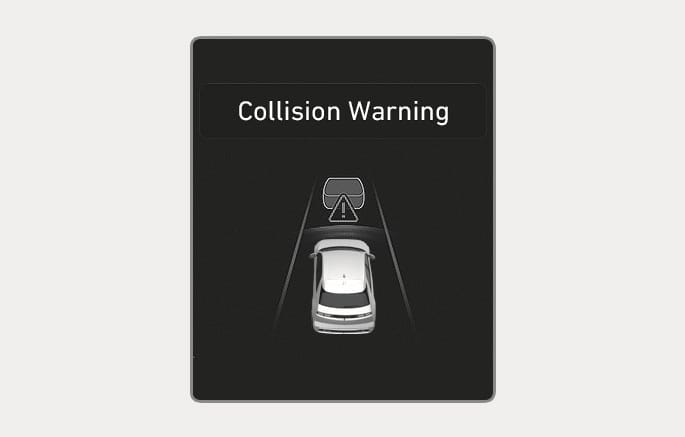
Collision Warning
2C_FCABasicCollisionWarningInfo
-
To warn the driver of a collision, the "Collision Warning" warning message will appear on the cluster, an audible warning will sound, and the steering wheel will vibrate.
-
If a vehicle or powered two-wheeler is detected in front, the function will operate when your vehicle speed is about 6-124 mph (10-200 km/h).
-
If a pedestrian or cyclist is detected in front, the function will operate when your vehicle speed is about 6-53 mph (10-85 km/h).
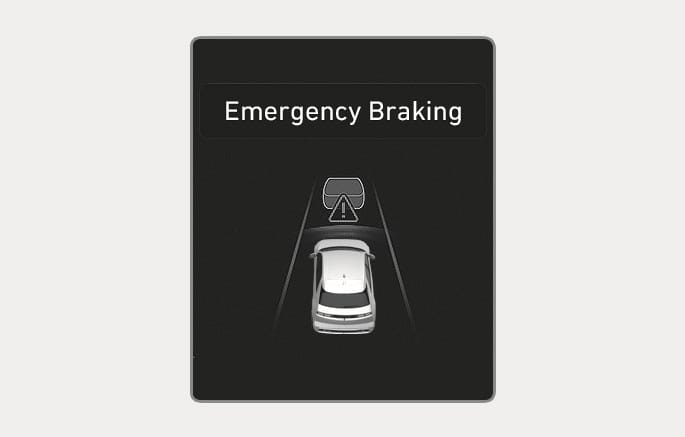
Emergency Braking
2C_FCABasicEmergencyBrakingInfo
To warn the driver that emergency braking will be assisted, the "Emergency Braking" warning message will appear on the cluster, an audible warning will sound, and the steering wheel will vibrate.
Emergency braking will operate under the following conditions.
-
Vehicle or powered two-wheeler:
|
Driving vehicle |
Stopped vehicle |
|
|
Weak braking power |
About 6-124 mph (10-200 km/h) |
|
|
Strong braking power |
About 6-80 mph (10-130 km/h) |
About 6-52 mph (10-85 km/h) 6-62 mph (10-100 km/h)*1 |
If Forward Collision-Avoidance Assist judges that avoiding a collision is difficult even by changing the driving lane, braking is assisted more earlier. (if equipped)
-
Pedestrian or cyclist:
The function will operate when your vehicle speed is about 6-40 mph (10-65 km/h).
-
The function operation range may decrease due to the front traffic condition or the surroundings of the vehicle.
-
When driving at night, the powered two-wheeler recognition performance is degraded, so Forward Collision-Avoidance Assist may be temporarily limited or may not work.
Stopping vehicle and ending brake control
2C_DriveCarefullyWarning_2
-
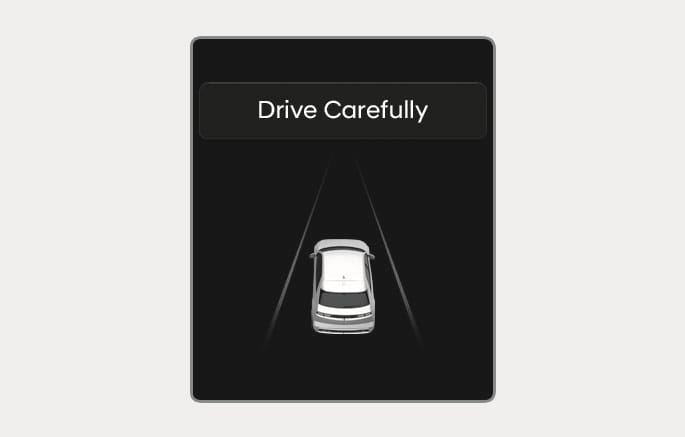
When the vehicle is stopped due to emergency braking, the "Drive Carefully" warning message will appear on the cluster.
For your safety, the driver should depress the brake pedal immediately and check the surroundings.
-
Brake control will end after the vehicle is stopped by emergency braking for about 2 seconds.
The audible warning can be turned off while collision warning or emergency braking is operating by pressing the hazard warning flasher button.
Junction Turning function will warn and help control the vehicle depending on the collision risk level.
Collision Warning
2C_FCAJunctionTurningCollisionWarningInfo
-
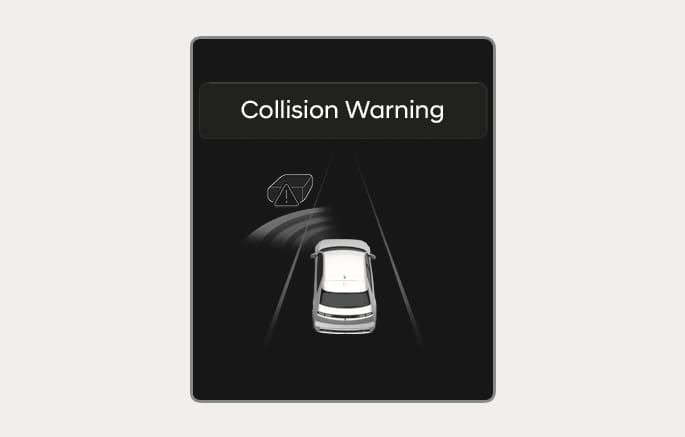
To warn the driver of a collision, the "Collision Warning" warning message will appear on the cluster, an audible warning will sound, and the steering wheel will vibrate.
-
The function will operate when your vehicle speed is between about 6-19 mph (10-30 km/h) and the oncoming vehicle speed is between about 19-44 mph (30-70 km/h), powered two-wheeler and cyclist speed is between about 9-44 mph (15-70 km/h)*1.
Emergency Braking
2C_FCAJunctionTurningEmergencyBrakingInfo
-
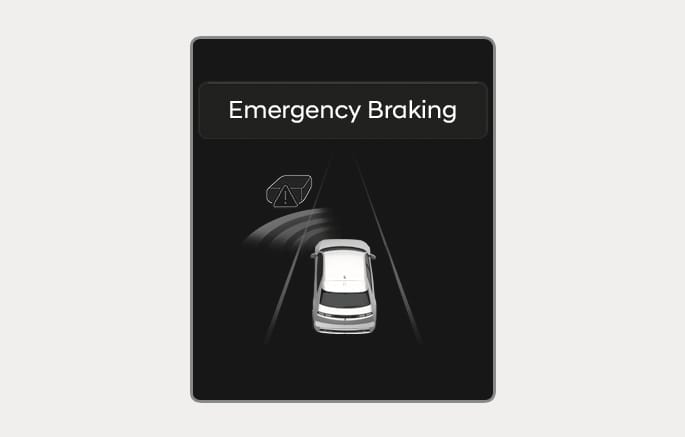
To warn the driver that emergency braking will be assisted, the "Emergency Braking" warning message will appear on the cluster, an audible warning will sound, and the steering wheel will vibrate.
-
In emergency braking situation, braking is assisted with strong braking power by the function to help prevent collision with the oncoming vehicle.
-
The function will operate when your vehicle speed is between about 6-19 mph (10-30 km/h) and the oncoming vehicle speed is between about 19-44 mph (30-70 km/h), powered two-wheeler and cyclist speed is between about 9-44 mph (15-70 km/h).
Stopping vehicle and ending brake control
2C_DriveCarefullyWarning_2
-
When the vehicle is stopped due to emergency braking, the "Drive Carefully" warning message will appear on the cluster.
For your safety, the driver should depress the brake pedal immediately and check the surroundings.
-
Brake control will end after the vehicle is stopped by emergency braking for about 2 seconds.
-
When a collision warning is being issued or emergency braking is being engaged, press the hazard warning flasher button to turn off the warning sound.
-
When turning right at an intersection with the right turn signal on, braking is assisted to reduce or avoid collisions if there is a collision risk with a cyclist approaching at the speed of 9-12 mph (15-20 km/h) from the opposite side.
Direct Oncoming function will warn and control the vehicle depending on the collision risk level.
Collision Warning
2C_FCABasicCollisionWarningInfo
-
To warn the driver of a collision, Forward Safety (
O ) warning light blinking, the "Collision Warning" warning message will appear on the instrument cluster, an audible warning will sound, and the steering wheel will vibrate. -
The function will operate when your vehicle speed is about 19-80 mph (30-130 km/h) (if equipped junction crossing function, 6-80 mph (10-130 km/h)) and the detected oncoming vehicle or powered two-wheeler speed is above 6 mph (10 km/h).
Emergency Braking
2C_FCABasicEmergencyBrakingInfo
-
To warn the driver that emergency braking will be assisted, Forward Safety (
O ) warning light blinking, the "Emergency Braking" warning message will appear on the instrument cluster, an audible warning will sound, and the steering wheel will vibrate. -
In emergency braking situation, braking is assisted with strong braking power by the function to help prevent collision with the oncoming vehicle.
-
The function will operate when your vehicle speed is about 19-80 mph (30-130 km/h) and the detected oncoming vehicle or the oncoming powered two-wheeler speed is above 6 mph (10 km/h).
Stopping vehicle and ending brake control
2C_DriveCarefullyWarning_2
-
When the vehicle is stopped due to emergency braking, the "Drive Carefully" warning message will appear on the instrument cluster. For your safety, the driver should depress the brake pedal immediately and check the surroundings.
-
Brake control will end after the vehicle is stopped by emergency braking for about 2 seconds.
-
If your vehicle or the oncoming vehicle or the oncoming powered two-wheeler is not driving straight, Direct Oncoming function warning and control may be late or may not operate.
-
When driving at night, the powered two-wheeler recognition performance is degraded, so Forward Collision-Avoidance Assist may be temporarily limited or may not work.
Press the hazard warning flasher to turn off the audible warning of the collision warning or emergency braking system.
Junction Crossing function will warn and control the vehicle depending on collision risk level.
Collision Warning
2C_FCAJunctionCrossingCollisionWarningInfo
-
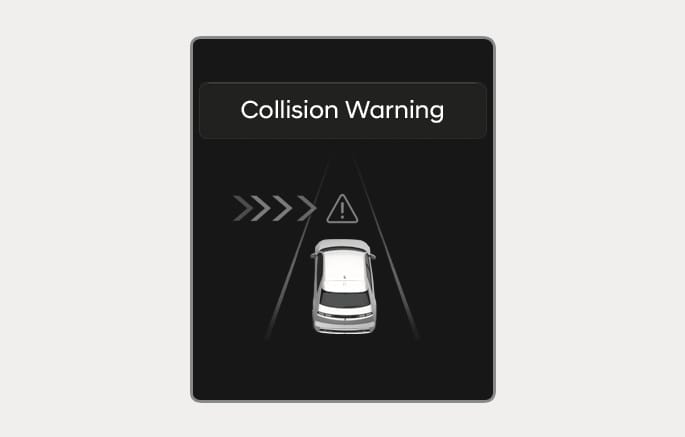
To warn the driver of a collision, Forward Safety (
O ) warning light blinking, the "Collision Warning" warning message will appear on the instrument cluster, an audible warning will sound, and the steering wheel will vibrate. -
The function will operate when your vehicle speed is about 6-34 mph (10-55 km/h) and the crossing vehicle speed is about 6-37 mph (10-60 km/h).
Emergency Braking
2C_FCAJunctionCrossingEmergencyBrakingInfo
-
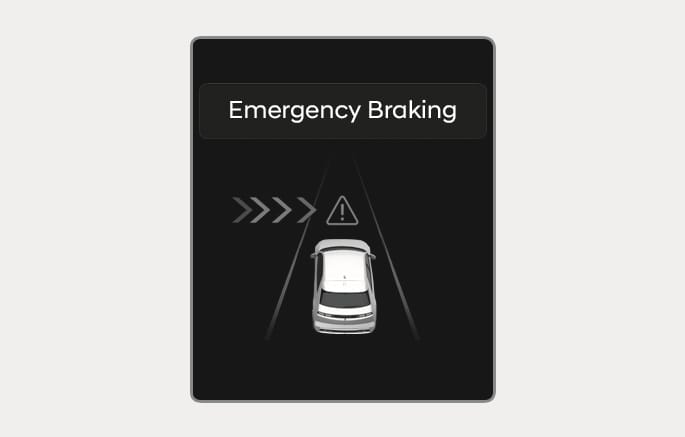
To warn the driver that emergency braking will be assisted, Forward Safety (
O ) warning light blinking, the "Emergency Braking" warning message will appear on the instrument cluster, an audible warning will sound, and the steering wheel will vibrate. -
In emergency braking situation, braking is assisted with strong braking power by the function to help prevent collision with the crossing vehicle.
-
The function will operate when your vehicle speed is about 6-34 mph (10-55 km/h) and the crossing vehicle speed is about 6-25 mph (10-40 km/h).
Stopping vehicle and ending brake control
2C_DriveCarefullyWarning_2
-
When the vehicle is stopped due to emergency braking, the "Drive Carefully" warning message will appear on the instrument cluster.
For your safety, the driver should depress the brake pedal immediately and check the surroundings.
-
Brake control will end after the vehicle is stopped by emergency braking for about 2 seconds.
If the collision angle with the crossing vehicle is beyond a certain range, Junction Crossing function warning and control may be late or may not operate.
Press the hazard warning flasher to turn off the audible warning of the collision warning or emergency braking system.
Lane-Change Oncoming function will warn and control the vehicle depending on collision risk level.
Collision Warning
2C_FCAJunctionTurningCollisionWarningInfo
-
To warn the driver of a collision, the "Collision Warning" warning message will appear on the instrument cluster, an audible warning will sound, and the steering wheel will vibrate.
-
The function will operate when your vehicle speed is about between 25-90 mph (40-145 km/h) and the oncoming vehicle or powered two-wheeler speed is above 6 mph (10 km/h) and the relative speed with your vehicle is below 124 mph (200 km/h).
Emergency Steering
2C_FCALaneChangeOncomingEmergencySteeringInfo
-
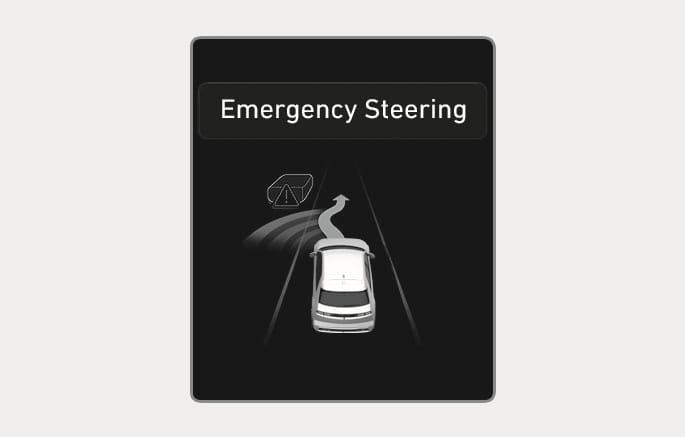
To warn the driver that emergency steering will be assisted, Emergency Steering (
P ) warning light blinking, the "Emergency Steering" warning message will appear on the instrument cluster, an audible warning will sound, and the steering wheel will vibrate. -
In emergency steering situation, steering is assisted by the function to help prevent collision with the oncoming vehicle.
-
The function will operate when your vehicle speed is about 25-90 mph (40-145 km/h) and the oncoming vehicle or powered two-wheeler speed is above 6 mph (10 km/h) and the relative speed with your vehicle is below 124 mph (200 km/h).
Lane-Change Side function will warn and control the vehicle depending on collision risk level.
Collision Warning
2C_FCAJunctionTurningCollisionWarningInfo
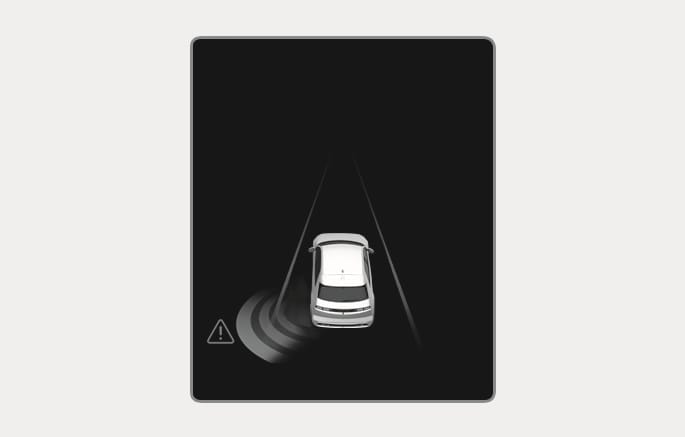
2C_FCALaneChangeSideCollisionWarningInfo
-
To warn the driver of a collision, Emergency Steering (
P ) warning light blinking, the "Collision Warning" warning message will appear on the instrument cluster, an audible warning will sound, and the steering wheel will vibrate. -
The function will operate when your vehicle speed is about 25-90 mph (40-145 km/h).
Emergency Steering
2C_FCALaneChangeOncomingEmergencySteeringInfo
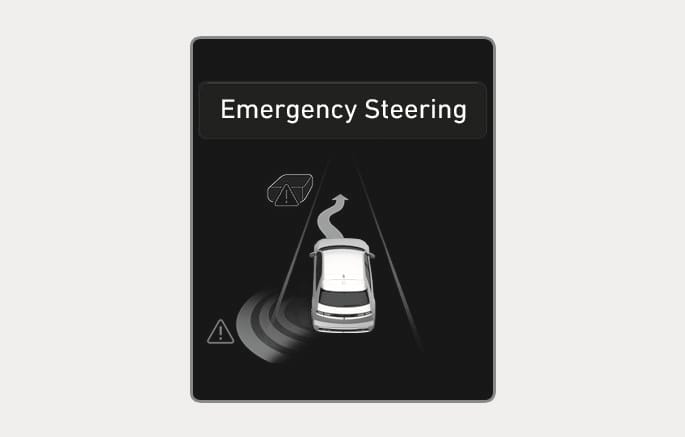
2C_FCALaneChangeOncomingEmergencySteeringInfo_2
-
To warn the driver that emergency steering will be assisted, Emergency Steering warning (
P ) light blinking, the "Emergency Steering" warning message will appear on the instrument cluster, an audible warning will sound, and the steering wheel will vibrate. -
In emergency steering situation, steering is assisted by the function to help prevent collision with the side vehicle.
-
The function will operate when your vehicle speed is about 25-90 mph (40-145 km/h) and front-side vehicle and powered two-wheeler is driving.
-
Lane-Change Side function does not operate if the speed of the preceding vehicle or powered two-wheeler from the front side is 0 mph (0 km/h).
-
The detecting range of the front corner radar and the rear corner radar is determined by a standard road width, therefore, on a narrow road, Lane-Change Side function may detect other vehicles two lanes over and warn you. In contrast, on a wide road, Lane-Change Side function may not be able to detect a vehicle driving in the next lane and may not warn you.
-
Collision-avoidance assist will be canceled under the following circumstances:
-
Your vehicle enters the next lane by a certain distance.
-
Your vehicle is away from the collision risk.
-
The steering wheel is sharply steered.
-
The brake pedal is depressed.
-
Forward Collision-avoidance assist is operating.
-
-
After Lane-Change Side function operation or lane change, you must drive to the center of the lane. Lane-Change Side function will not operate if the vehicle is not driven in the center of the lane.
When an additional accident is expected, Lane-Change Side function will not assist with steering and only warn the driver of a collision.
Evasive Steering Assist function will warn and control the vehicle with 'Emergency steering'.
Emergency Steering (Driver steering assist)
2C_FCALaneChangeOncomingEmergencySteeringInfo
-
To warn the driver that emergency steering will be assisted, Emergency Steering (
P ) warning light blinking, the "Emergency Steering" message will appear on the instrument cluster, an audible warning will sound, and the steering wheel will vibrate. -
If there is a risk of collision with a vehicle, powered two-wheeler, pedestrian and cyclist in front, the steering will be assisted to help prevent collision when the driver steers the vehicle to avoid collision.
-
The function will operate when your vehicle speed is about 25-53 mph (40-85 km/h).
Emergency Steering (Evasive steering assist)
2C_FCALaneChangeOncomingEmergencySteeringInfo
-
To warn the driver that emergency steering will be assisted, Emergency Steering (
P ) warning light blinking, the "Emergency Steering" message will appear on the instrument cluster, an audible warning will sound, and the steering wheel will vibrate. -
If there is high risk of collision with a pedestrian, cyclist or powered two-wheeler in front, and the vehicle speed to operate emergency braking is within the operation range, the steering will be assisted to help prevent collision when there is space to avoid collision in the driving lane.
-
The function will operate when your vehicle speed is about 40-47 mph (65-75 km/h).
-
The steering wheel may turn automatically when emergency steering is operating.
-
Emergency steering will automatically cancel when risk factors disappear. If necessary, the driver must steer the vehicle.
-
Emergency steering may not operate or may cancel during operation if the steering wheel is held tight or steered in the opposite direction.
-
When steering is assisted to avoid collision with a vehicle, powered two-wheeler, pedestrian and cyclist, Evasive steering assist will be cancelled if collisions with other objects (vehicles, powered two-wheeler, pedestrians, or cyclists) are expected.
-
Evasive steering assist may not operate if space to avoid collision in the driving lane is insufficient.
-
When driving at night, the detecting performance of powered two-wheeler may decrease and temporarily limit or disable Front Collision-Avoidance Assist.
For more information on warning messages, refer to Collision Warning in "Forward Collision-Avoidance Assist Operation" section in this chapter.
Take the following precautions when using Forward Collision-Avoidance Assist:
-
For your safety, only change the Settings after parking the vehicle at a safe location.
-
Forward Collision-Avoidance Assist does not operate in all situations and cannot avoid all collisions.
-
The driver has the responsibility to control the vehicle. Do not solely depend on Forward Collision-Avoidance Assist. Rather, maintain a safe braking distance, and if necessary, depress the brake pedal to reduce driving speed or to stop the vehicle.
-
Never deliberately operate Forward Collision-Avoidance Assist on people, objects, etc. It may cause serious injury or death.
-
Forward Collision-Avoidance Assist may not operate if the driver depresses the brake pedal to avoid collision.
-
Depending on the road and driving conditions, Forward Collision-Avoidance Assist may warn the driver late or may not warn the driver.
-
During Forward Collision-Avoidance Assist operation, the vehicle may stop suddenly injuring passengers and shifting loose objects. Always have the seat belt on and keep loose objects secured.
-
If any other system's warning message appears or audible warning is generated, Forward Collision-Avoidance Assist warning message may not be displayed and audible warning may not be generated.
-
You may not hear the warning sound of Forward Collision-Avoidance Assist if the surrounding is noisy.
-
Forward Collision-Avoidance Assist may turn off or may not operate properly or may operate unnecessarily depending on the road conditions and the surroundings.
-
Even if there is a problem with Forward Collision-Avoidance Assist, the vehicle's basic braking performance will operate properly.
-
During emergency braking, braking control by Forward Collision-Avoidance Assist will automatically cancel when the driver excessively depresses the accelerator pedal or sharply steers the vehicle.
-
Depending on the condition of the vehicle, powered two-wheeler, pedestrian and cyclist in front and the surroundings, the speed range to operate Forward Collision-Avoidance Assist may reduce. Forward Collision-Avoidance Assist may only warn the driver, or it may not operate.
-
Forward Collision-Avoidance Assist will operate under certain conditions by judging the risk level based on the condition of the vehicle, powered two-wheeler, driving direction, speed and surroundings.
-
Forward Collision-Avoidance Assist may be limited or disabled if the vehicle speed is too high or the distance to the vehicle ahead is far.
-
When a collision with a surrounding vehicle is expected, Lane-Change Oncoming, Lane-Change Side and Evasive Steering Assist will not assist you with steering but only warn the you of a collision.
-
In a situation where collision is imminent, braking may be assisted by Forward Collision-Avoidance Assist when braking is insufficient by the driver.
-
The images and colors in the instrument cluster may differ depending on the cluster type or theme selected in the infotainment system.