Selective catalytic reduction (SCR) (for diesel engine)
Selective Catalytic Reduction system catalytically converts NOx to nitrogen and water by using reduction agent, urea solution.
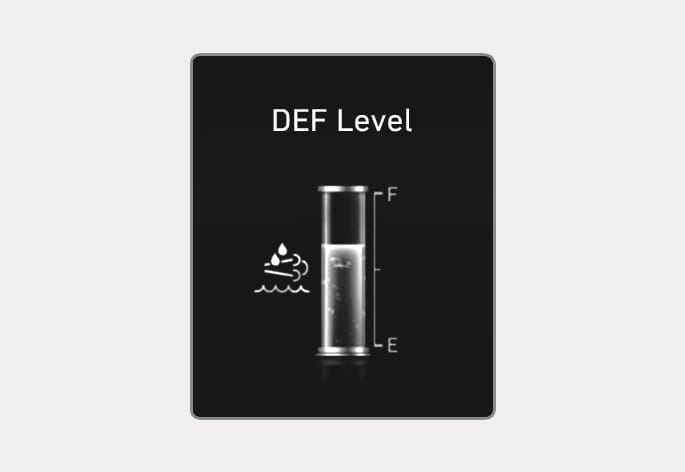
OTM090070L
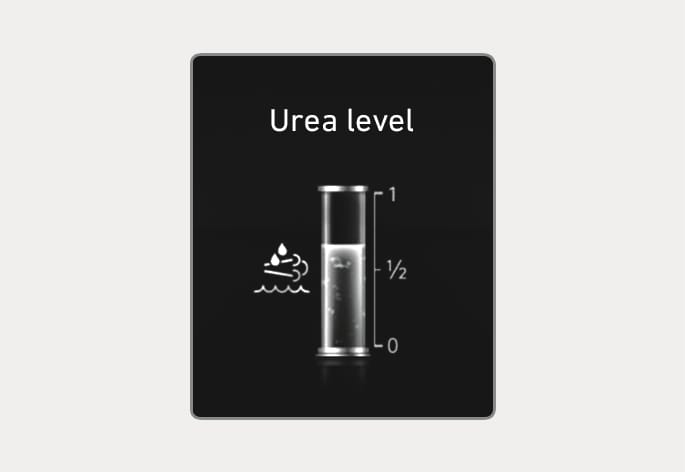
OTM090071L
DEF (Diesel Exhaust Fluid) level gauge display shows the approximate amount of remaining urea solution inside the urea solution tank.
You can check the DEF level in the Utility view on the cluster.
Refer to "View modes" section in chapter 4.
Warning message will appear in four steps on the cluster according to urea solution level in the tank.
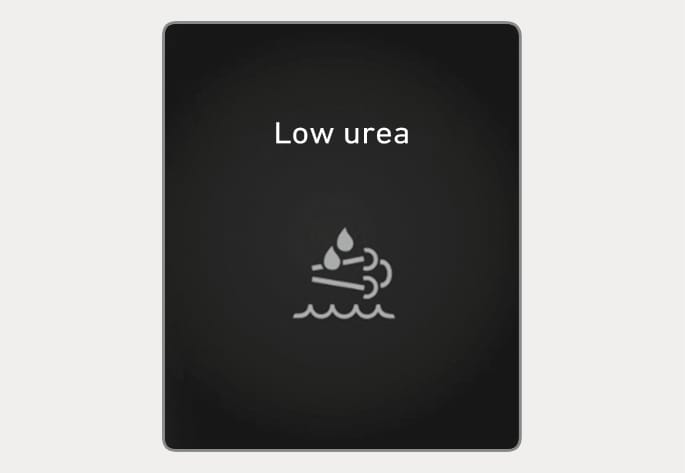
OJX1099041L
First warning
The SCR (
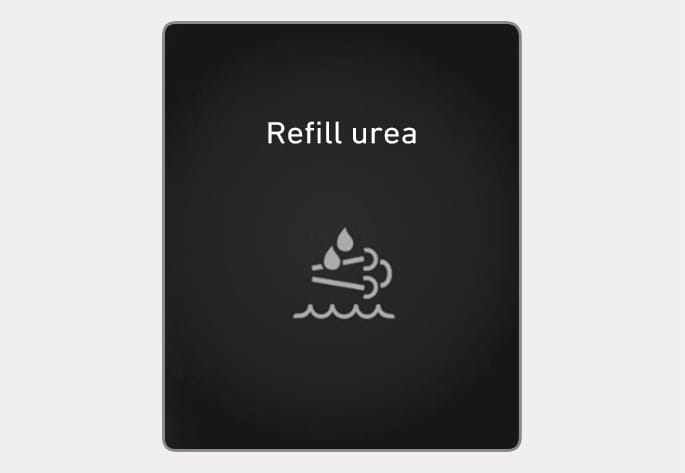
OJX1099043L
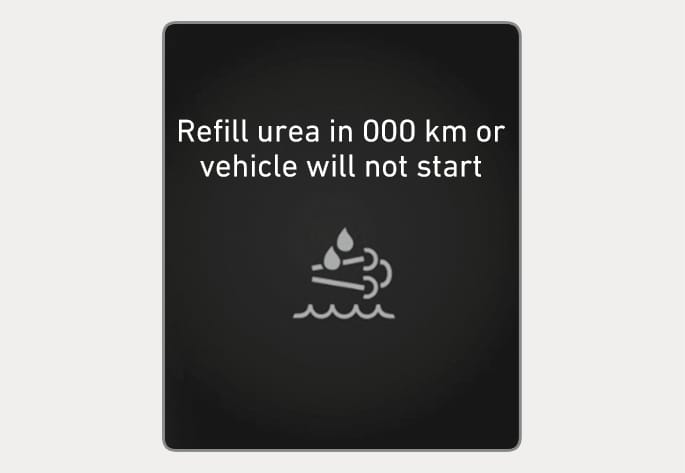
Second warning
If urea is not refilled after the first warning, the SCR (
OJX1099042L
Third warning
The SCR (
The displayed driving distance (000 km) and actual driving distance may vary depending on driving habits and driving conditions.
OJX1099044L
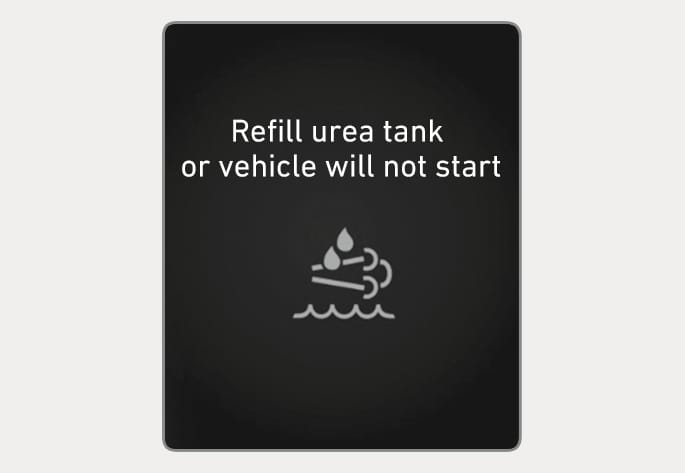
Fourth warning
The SCR (
When there is a problem with the Selective Catalytic Reduction system such as disconnected electrical components, use of incorrect urea, etc., the following warning message will appear on the instrument cluster. If this occurs, we recommend that the system be inspected by an authorized HYUNDAI dealer.
If you continue to drive without the problem solved, it may adversely effect system performance or the vehicle cannot be restarted once the engine is turned off.
|
Malfunction |
Driving 50 km after malfunction |
|
|
Urea system failure(= no urea injection) |
Diesel Exhaust Fluid (DEF) system failure / Urea dosing system error |
Check urea system |
|
Incorrect urea detected(= abnormal urea) |
Incorrect urea detected |
Refill with correct urea in 000 km or vehicle will not start / Refill correct urea in 000 km. Otherwise vehicle will not start |
|
Abnormal urea consumption(= post treatment failure) |
Check urea system |
Service urea system in 000 km or vehicle will not start / Service urea system in 000 km. Otherwise vehicle will not start |
|
Vehicle restart restriction |
|
|
Low urea level |
Refill urea tank or vehicle will not start / Refill urea tank. Otherwise vehicle will not start |
|
Urea system failure(= no urea injection) |
Service urea system in 000 km or vehicle will not start / Service urea system in 000 km. Otherwise vehicle will not start |
|
Incorrect urea detected(= abnormal urea) |
Refill with correct urea in 000 km or vehicle will not start / Refill with correct urea in 000 km. Otherwise vehicle will not start |
|
Abnormal urea consumption(= post treatment failure) |
Service urea system in 000 km or vehicle will not start / Service urea system in 000 km. Otherwise vehicle will not start |
The vehicle can be restarted after the problem is solved. If the 'Refill urea tank or vehicle will not start / Refill urea tank. Otherwise vehicle will not start' warning message appears, refill the urea solution tank. After refilling the tank, press the Engine Start/Stop button to the ON position and wait until the message disappears. If the vehicle cannot be restarted after refilling urea, we recommend that the system be inspected by an authorized HYUNDAI dealer.
ONX4090037
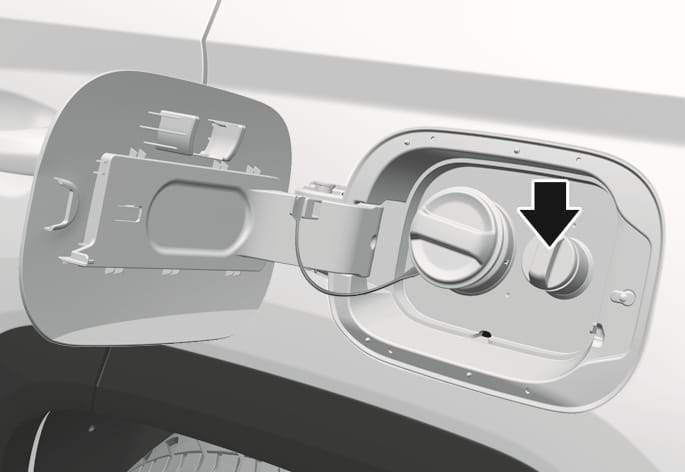
Refilling urea with a refill hose
-
Turn the vehicle off.
-
To open the urea solution tank cap, turn it counterclockwise.
-
Fully insert the refill hose and add urea.
Do not overfill.
-
To close the urea solution tank cap, turn it clockwise.
Refilling urea from a refill bottle
-
Turn the vehicle off.
-
To open the urea solution tank cap, turn it counterclockwise.
-
Add urea. Do not overfill.
-
To close the urea solution tank cap, turn it clockwise.
Use only specified urea solution (Refer to "Recommended lubricants and capacities" section in chapter 2).
To prevent damage to your vehicle:
-
Use only specified urea solution. Never add any other urea solution than what has been specified.
-
Be careful not to add urea solution into the fuel tank.
-
While adding urea, be careful not to allow foreign substances to enter into the urea solution tank.
-
Do not mix water or additives with the urea solution.
-
Do not over fill the urea solution tank. In cold weather, the tank will expand if the urea freezes.
-
Store urea solution only in containers made with the following materials.
-
DIN EN 10 088-1-/-2-/-3-specified CR-Ni steel
-
Mo-Cr-Ni steel
-
Polypropylene
-
Polyethylene
-
-
Do not store urea solution in containers made with the following materials.
-
Aluminum, copper, copper alloy, non-alloyed still, and galvanized steel
-
Urea solution dissolves the metal materials, severely damaging the exhaust purification system.
-
Do not apply any external impact on the DPF system. It may damage the catalyst, which is equipped inside the DPF system.
-
Do not modify the DPF system by redirecting or lengthening the exhaust pipe. It may adversely effect the DPF system.
-
Avoid contact with the drained water from the exhaust pipe. The water is slightly acid and harmful to skin. If contacted, thoroughly wash it off.
-
Any modification of the DPF system may cause system malfunction. The DPF system is controlled by a complex device.
-
Wait for the DPF system to cool down before maintenance, as it is hot due to heat generation. Otherwise, it may cause skin burn.
-
The Selective Catalytic Reduction system (for example, urea solution nozzle, urea solution pump, and DCU) operates for approximately 2 minutes more to eliminate the remaining urea solution inside, even after the engine is turned OFF. Before working on the vehicle, make sure that the Selective Catalytic Reduction system is completely turned OFF.
-
Poor urea solution or unauthorized liquids may damage vehicle components, including the DPF system. Any unverified additives in the urea solution may clog the SCR catalyst and cause other malfunctions, which require the expensive DPF system to be replaced.
-
When the urea solution contacts with the eyes or the skin, you should thoroughly wash the contaminated skin area.
-
When you swallow the urea solution, thoroughly rinse your mouth and drink a lot of fresh water. Then, immediately consult a doctor.
-
When your cloth is contaminated with the urea solution, immediately change your cloth.
-
When you have an allergic reaction to the urea solution, immediately consult a doctor.
-
Keep children away from urea solution.
-
When opening the urea solution tank cap at high outside temperatures, ammonia vapors may escape. Ammonia vapors have a pungent smell and primarily cause irritation of the:
-
Skin
-
Mucous membranes
-
Eyes
You may experience a burning sensation in your eyes, nose and throat, as well as coughing and watering of the eyes. Do not inhale ammonia vapors. Do not allow urea solution to come in direct contact with your skin. It is hazardous to your health. Wash any affected areas off with plenty of clean water. If necessary, consult a doctor.
-
-
When handling urea solution in closed space, ensure good ventilation. When the bottle of urea solution container is opened, pungent smelling fumes may escape
-
The following situations may damage the DPF system.
-
Fuels or any unauthorized liquids are added to the urea solution tank
-
Additives are mixed in the urea solution
-
Water is mixed in the urea solution
-
-
Use only specified urea solution.
When any unauthorized urea solution is added to the tank, we recommend that you contact an authorized HYUNDAI dealer.
-
When any foreign substances enter the urea solution tank, the following problems may occur.
-
Increased emission
-
DPF system malfunction
-
Engine failure
-
-
Never add used urea solution as its quality cannot be guaranteed. Always add new urea solution.
-
Wipe off any urea solution spillage with water or dampened cloth. When the urea solution is crystalized, wipe it off with sponge or cloth, which is dampened in cold water.
When the urea solution spillage is exposed in the air for an extended period of time, it is crystalized in white, damaging the vehicle surface.
-
When urea solution overflows onto vehicle surface, wash out vehicle surface with clean water to prohibit corrosion from occurring.
-
Store the urea solution tank only in well ventilated locations. When urea solution is exposed to hot temperature at approximately 50°C (122°F) for an extended period of time (for example, under direct sunlight), chemical decomposition may occur, emitting ammonia vapor.
-
In case the vehicle was parked at very low ambient temperature (below -11°C (12°F)) for a long time, the urea solution will be frozen in the urea solution tank. With frozen urea, the tank level may not be detected correctly until the urea solution melts. Incorrect urea or diluted urea may increase the freezing point, so only use specified urea solution.
The time for the urea solution to melt varies in accordance with driving conditions and outside temperatures.
Urea solution is a water-soluble substance, which is inflammable, non-toxic, colorless and odorless.